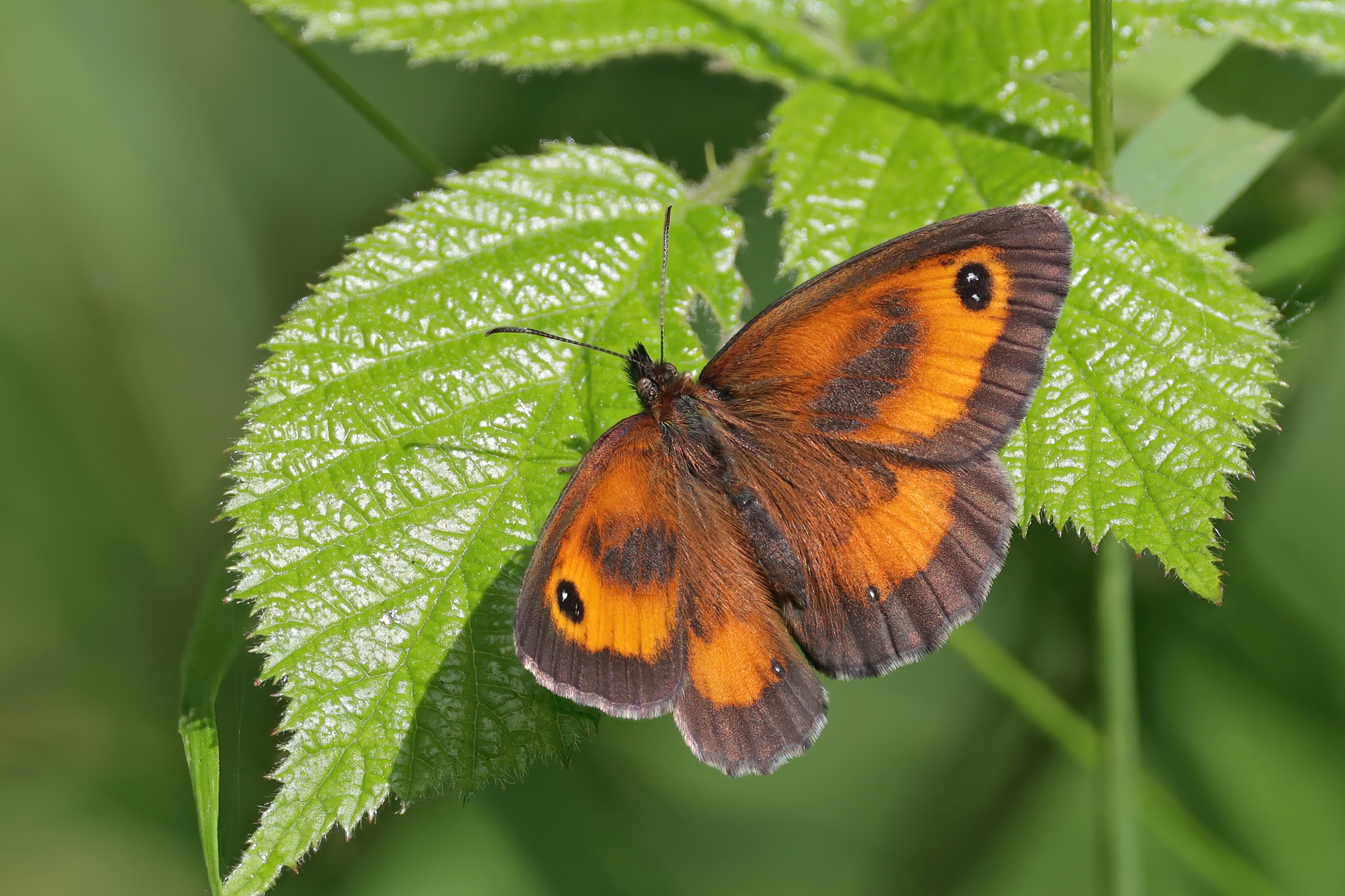
Gatekeeper
Pyronia tithonus
Photo: Wikimedia Commons (CC) via https://en.wikipedia.org/wiki/Gatekeeper_(butterfly)
Overview
The gatekeeper or hedge brown is a species of butterfly found across Europe. Given its preference for warmer weather, the restriction of range expansion can be assumed to be due to climate. Colonies vary in size depending on the available habitat, and can range from a few dozen to several thousand butterflies.
Named for its rigorous patrol of hedges and woodland rides, the gatekeeper butterfly is a prime pollinator. The caterpillars primarily feed on fine grasses such as fescues (Festuca) and bents (Agrostis), which are common in meadows and roadside verges.
The Gatekeeper butterfly is experiencing severe population declines primarily due to habitat loss and fragmentation of grassland ecosystems. Agricultural intensification, urbanization, and changes in land management practices have eliminated much of the species' preferred habitat of flower-rich grasslands and woodland edges. Climate change is also affecting the species' distribution and the availability of its host plants and nectar sources.
Habitat
As indicated by its alternate name, the gatekeeper butterfly prefers the habitat of meadow margins and hedges; field gates are often in such locations, thus the gatekeeper can be found much more frequently in such locations than the meadow brown, for example.
Other threatened species in Nymphalidae


Threatened in Albania

Frequently asked questions
Why is Gatekeeper classified as Critically Endangered?
Where does Gatekeeper live?
What are the main threats to Gatekeeper?
Get weekly conservation intelligence
One short digest a week of the most striking species and country data we ship, plus breaking conservation news paired with our database where it matters.
Free, no spam. One-click unsubscribe in every email.