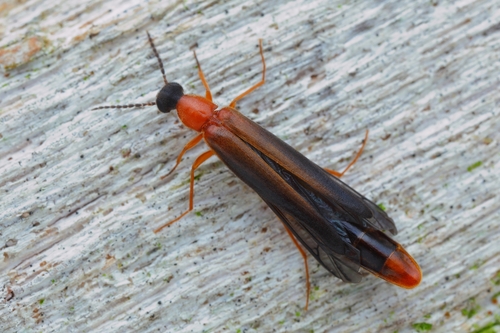
Lymexylon navale
Photo: Photo: (c) Nikola Rahmé, all rights reserved, uploaded by Nikola Rahmé
Overview
Lymexylon navale, commonly known as the ship-timber beetle or fil de fer, is a wood-boring beetle species with an elongated, cylindrical body typically measuring 10-25mm in length. The adults have a distinctive reddish-brown to dark brown coloration, while their larvae create characteristic tunnels in dead and dying hardwood trees. This species plays a crucial ecological role as a decomposer, helping break down dead wood material in forest ecosystems.
Lymexylon navale, the ship-timber beetle, faces severe population decline primarily due to habitat loss from deforestation and changes in forest management practices that have reduced availability of suitable dead and dying hardwood trees. The species' specialized requirements for specific types of decaying wood, particularly oak and beech, make it extremely vulnerable to modern forestry practices that remove dead timber. Climate change may further threaten remaining populations by altering forest composition and the availability of suitable breeding substrates.
Habitat
This species inhabits mature deciduous and mixed forests where it depends on dead or dying hardwood trees, particularly oak, beech, and other broad-leaved species with sufficient wood decay. The beetles require specific moisture and temperature conditions found in partially decomposed wood of fallen logs and standing dead trees in undisturbed forest environments.
Threatened in Austria
Frequently asked questions
Why is Lymexylon navale classified as Critically Endangered?
Where does Lymexylon navale live?
What are the main threats to Lymexylon navale?
Get weekly conservation intelligence
One short digest a week of the most striking species and country data we ship, plus breaking conservation news paired with our database where it matters.
Free, no spam. One-click unsubscribe in every email.