Crinia sloanei
Local name: Sloane’s Froglet
Overview
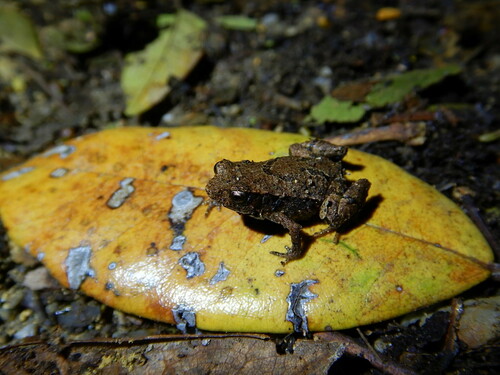
Crinia sloanei is a small ground-dwelling frog in the family Myobatrachidae, rarely exceeding 2.5 centimetres in length, with mottled brown-grey skin providing camouflage among grass and leaf litter. Males produce a distinctive multi-pulsed call to attract mates during breeding periods, typically after rain. Like other froglets, it plays a role in local food webs as both insectivore and prey, and its larvae contribute to nutrient cycling in temporary and semi-permanent water bodies.
The species is restricted to south-eastern Australia, occurring across parts of New South Wales and Victoria. It inhabits grassland and inland wetland habitats, including bogs, marshes, swamps, and fens, typically breeding in shallow, still or slow-moving water associated with floodplains and grassy lowlands.
Sloane's Froglet faces multiple ongoing pressures. Livestock farming and ranching degrade breeding habitat through trampling and vegetation loss, while conversion of land for annual and perennial crops removes suitable wetland and grassland habitat. Roads and railroads fragment populations and increase mortality.
Dams and broader water management alter natural flooding regimes essential for breeding. Logging affects surrounding vegetation structure, and invasive species, including introduced predators and pathogens such as chytrid fungus, add further pressure. Habitat shifting linked to broader environmental change compounds these threats.
Conservation responses include habitat protection within reserves, wetland restoration projects, and population monitoring across its known range, alongside research into breeding ecology and disease impacts. Some local governments incorporate the species into land-use planning considerations.
Population trends remain in decline, and the species is currently listed as Endangered. Continued habitat loss and fragmentation suggest ongoing vulnerability without sustained management intervention.
Sloane's Froglet is mainly threatened by the loss and disruption of its wetland habitat, caused by land being cleared or converted for livestock grazing and farming crops, as well as roads and dams that alter natural water flow. It also faces pressure from introduced species and diseases, along with ongoing logging in surrounding areas, and shifting environmental conditions that change its habitat over time. These threats appear to be ongoing and stable rather than clearly worsening or improving.
Habitat
Conservation measures underway
Other threatened species in MYOBATRACHIDAE

Threatened in Australia
Frequently asked questions
Why is Sloane’s Froglet classified as Endangered?
Where does Sloane’s Froglet live?
What are the main threats to Sloane’s Froglet?
Get weekly conservation intelligence
One short digest a week of the most striking species and country data we ship, plus breaking conservation news paired with our database where it matters.
Free, no spam. One-click unsubscribe in every email.