Australophyllia wilsoni
Overview
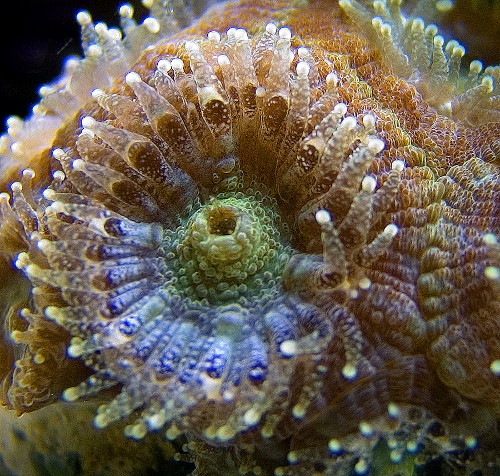
Australophyllia wilsoni is a solitary large-polyp stony coral in the family Lobophylliidae, distinguished by a fleshy, meandering skeletal structure and vividly colored, expanded polyp tissue that gives it a distinctive fleshy appearance among reef corals. Like other scleractinian corals, it relies on symbiotic zooxanthellae for energy and contributes to the physical framework of reef habitats, providing structural complexity that supports associated invertebrate and fish communities. Its exact behavioural ecology is not well documented, but it likely feeds through a combination of photosynthetic products and captured zooplankton, typical of large-polyped lobophylliids.
The species is found in marine neritic waters off Australia, typically associated with rocky substrates and reef habitats in shallow to moderate depths. Its known range appears geographically restricted compared to many widespread reef-building corals.
Australophyllia wilsoni faces a combination of pressures common to reef-associated species in the region. Coastal mining and quarrying operations degrade nearby substrate and increase sedimentation, while runoff from agricultural and perennial crop production contributes nutrient and chemical pollution. Domestic and urban wastewater discharge further compounds water quality decline.
The species is also collected for the aquarium trade through harvesting activities, and is subject to disturbance from recreational reef use. Disease and competition from invasive or problematic native species add additional biological stress, compounding the effects of habitat shifting driven by broader environmental change.
Conservation measures specific to this species are limited, though it benefits indirectly from Australian marine park zoning, water quality management programs, and general reef protection frameworks applicable to Lobophylliidae corals. Trade in the species may also be subject to regulation under international frameworks governing coral harvest and export.
Given ongoing habitat degradation, pollution inputs, and harvesting pressure, the population is assessed as decreasing, with no clear indication of stabilization in the near term.
This coral species faces harm from mining and quarrying near its habitat, along with fishing and harvesting activities and recreational use of its reef environment. It's also affected by pollution from sewage, agricultural runoff, and other unspecified sources, as well as competition from invasive species and diseases, and broader changes to its habitat driven by shifting environmental conditions. All of these pressures are currently ongoing and active, indicating the threats remain persistent rather than easing.
Habitat
Conservation measures underway
Other threatened species in LOBOPHYLLIIDAE

Threatened in Australia
Frequently asked questions
Why is Australophyllia wilsoni classified as Vulnerable?
Where does Australophyllia wilsoni live?
What are the main threats to Australophyllia wilsoni?
Get weekly conservation intelligence
One short digest a week of the most striking species and country data we ship, plus breaking conservation news paired with our database where it matters.
Free, no spam. One-click unsubscribe in every email.