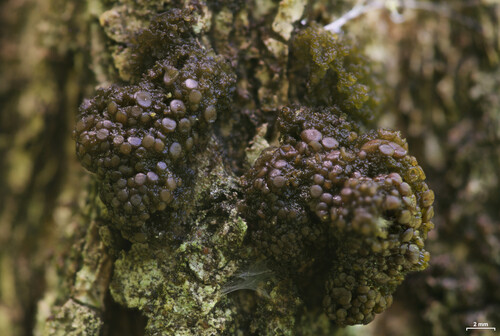
Crumpled Bat's Wing Lichen
Collema leptaleum
Photo: iNaturalist: (c) Alina Martin, some rights reserved (CC BY), uploaded by Alina Martin
Overview
Askeglye (Collema leptaleum)
Askeglye is a foliose lichen species characterized by its thin, leaf-like thallus with a distinctive gelatinous texture when moist. The lichen forms small, irregularly lobed structures that appear dark olive-green to blackish when wet and become pale greyish-brown upon drying. Like other members of the Collema genus, askeglye contains cyanobacteria as its photosynthetic partner, enabling it to fix atmospheric nitrogen and contribute to soil formation processes in its ecosystem.
This critically endangered lichen has an extremely limited geographic distribution, known from only a few locations in Northern Europe, particularly in Scandinavia. Askeglye typically grows on calcareous substrates, including limestone rocks and mortar in old stone walls, preferring areas with stable moisture conditions and minimal disturbance.
The species faces significant threats from habitat degradation and loss. Urban development and modernization of historic stone structures have eliminated many potential growing sites. Air pollution, particularly nitrogen deposition, alters the chemical composition of its preferred substrates, making them unsuitable for colonization. Climate change may also affect the delicate moisture balance required for the lichen's survival.
Current conservation efforts remain limited due to the species' recent recognition and poorly understood ecology. Some European countries have initiated lichen monitoring programs that include Collema species, though specific measures targeting askeglye are minimal.
The outlook for askeglye remains precarious. Without targeted conservation intervention and habitat protection, this species faces continued decline. Its extremely restricted range makes it particularly vulnerable to local extinctions from individual site disturbances.
The primary threats to askeglye (Collema leptaleum) have not been assessed or documented by scientists yet. Without a proper threat assessment, it's unclear what specific dangers this species faces or how human activities might be affecting its survival. The status of threats to this species cannot be determined as increasing, stable, or decreasing due to the lack of available data.
Habitat
Other threatened species in Collemataceae
Threatened in Argentina

Frequently asked questions
Why is Crumpled Bat's Wing Lichen classified as Critically Endangered?
Where does Crumpled Bat's Wing Lichen live?
What are the main threats to Crumpled Bat's Wing Lichen?
Get weekly conservation intelligence
One short digest a week of the most striking species and country data we ship, plus breaking conservation news paired with our database where it matters.
Free, no spam. One-click unsubscribe in every email.