Burgess' skin lichen
Leptogium burgessii
Overview
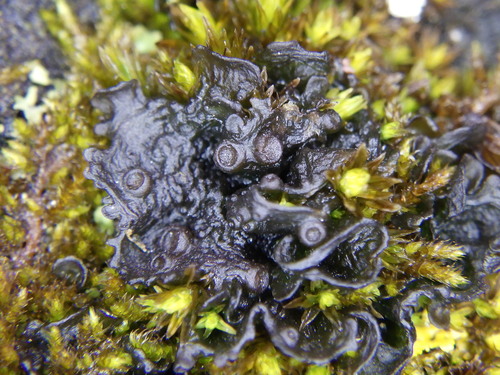
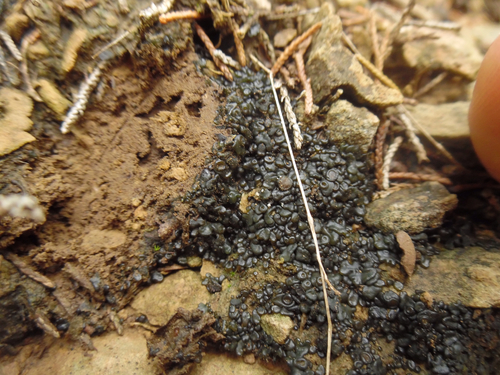
Leptogium burgessii is a foliose lichen in the family Collemataceae, formed through a symbiotic partnership between a fungus and cyanobacteria rather than algae, which gives it a distinctive blue-grey to olive-brown, gelatinous appearance when wet. Its thallus is composed of lobed, leaf-like structures with a soft, pliable texture, and it lacks the tough cortex found in many other lichens. As a nitrogen-fixing organism, it contributes to nutrient cycling within the ecosystems it inhabits, and its presence is often used as an indicator of ecological continuity and clean air.
The species has a remarkably wide distribution, recorded across more than 40 countries spanning Europe, the Americas, Africa, Asia, and Oceania. It is typically found on bark and mossy substrates in humid, undisturbed forests, particularly in areas with stable microclimates and long ecological continuity, reflecting its terrestrial habitat association.
Its VU status stems from a combination of ongoing pressures: air pollution and atmospheric nitrogen deposition alter substrate chemistry and harm sensitive lichen physiology; climate change and increasingly variable weather disrupt the humidity conditions the species depends upon; habitat fragmentation isolates populations and limits dispersal; and forest management practices, including logging and stand simplification, reduce the availability of suitable old bark substrates, which are also subject to broader substrate degradation.
Conservation efforts include monitoring within protected forest areas, inclusion in national lichen conservation assessments, and habitat protections tied to old-growth and ancient woodland designations in parts of its range. Population trends remain unknown due to limited systematic monitoring. Given the breadth of ongoing threats and its dependence on stable, undisturbed forest conditions, the species' long-term outlook remains uncertain without sustained habitat protection.
Burgess' skin lichen is mainly threatened by pollution in the air and rain, which can settle on the surfaces it grows on and disrupt its sensitive biology. It also faces problems from a changing climate, forests being broken up into smaller patches, logging and forest management activities that alter its habitat, and the gradual decline in quality of the tree bark or rock surfaces it depends on to survive. These combined pressures appear to be ongoing and steady rather than easing, suggesting the threats are currently stable but persistent.
Habitat
This rare lichen species inhabits old-growth and mature forests, typically growing on the bark of deciduous trees and occasionally on rock surfaces. It requires stable, humid microclimates with minimal disturbance and clean air quality.
Other threatened species in Collemataceae
Threatened in Argentina

Frequently asked questions
Why is Burgess' skin lichen classified as Vulnerable?
Where does Burgess' skin lichen live?
What are the main threats to Burgess' skin lichen?
Get weekly conservation intelligence
One short digest a week of the most striking species and country data we ship, plus breaking conservation news paired with our database where it matters.
Free, no spam. One-click unsubscribe in every email.