
Yellow Pond Turtle
Mauremys mutica
Photo: Photo: Wikimedia Commons, CC BY-SA
Overview
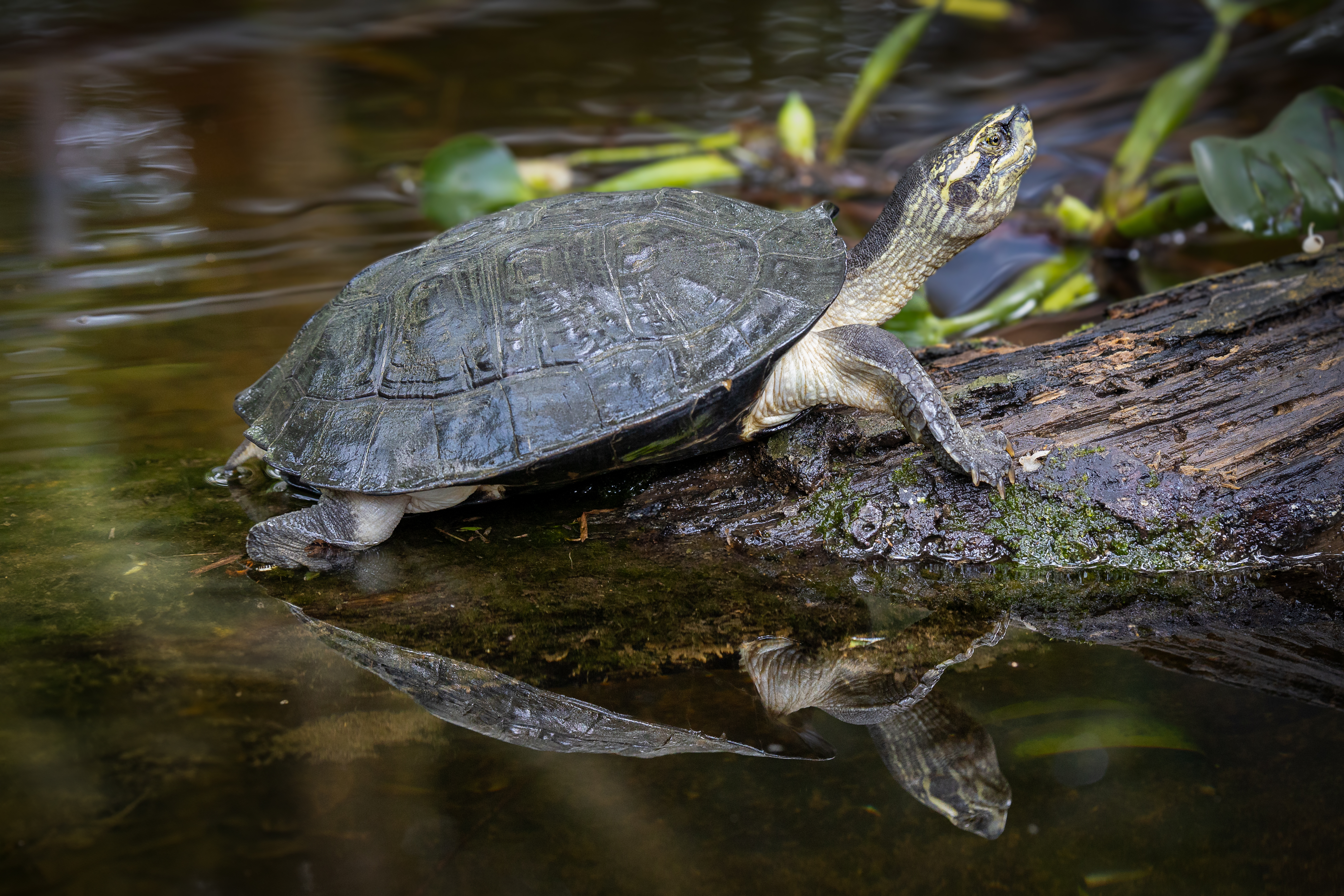
The yellow pond turtle, is a medium-sized, semiaquatic turtle in the family Geoemydidae. This species has a characteristic broad yellow stripe extending behind the eye and down the neck; the carapace ranges in color from grayish brown to brown, and the plastron is yellow or orange with black blotches along the outer edges. It is native to East Asia, ranging from central Vietnam and Laos, north through the coastal provinces of south and central China, with insular populations known from Taiwan, Hainan and the Ryukyu Islands.
Although populations in the southern Ryukyus are thought to be native, populations in the northern and central Ryukyus, as well as central Japan, are believed to have been introduced as a result of imports from Taiwan.
The Yellow Pond Turtle faces severe population decline primarily due to intensive collection for the traditional medicine trade and food markets across East Asia. Habitat destruction from urbanization and agricultural expansion has eliminated many freshwater wetlands where this species historically thrived. Water pollution from industrial runoff and agricultural chemicals further degrades remaining aquatic habitats, while introduced species compete for resources and nesting sites.
Habitat
Mauremys mutica inhabits slow-moving freshwater environments including ponds, marshes, rice paddies, and shallow streams with muddy bottoms and abundant aquatic vegetation. The species prefers areas with soft substrates for burrowing and nearby terrestrial sites suitable for nesting.
Conservation measures underway
Other threatened species in GEOEMYDIDAE


Threatened in China
Frequently asked questions
Why is Yellow Pond Turtle classified as Critically Endangered?
Where does Yellow Pond Turtle live?
What are the main threats to Yellow Pond Turtle?
Get weekly conservation intelligence
One short digest a week of the most striking species and country data we ship, plus breaking conservation news paired with our database where it matters.
Free, no spam. One-click unsubscribe in every email.