
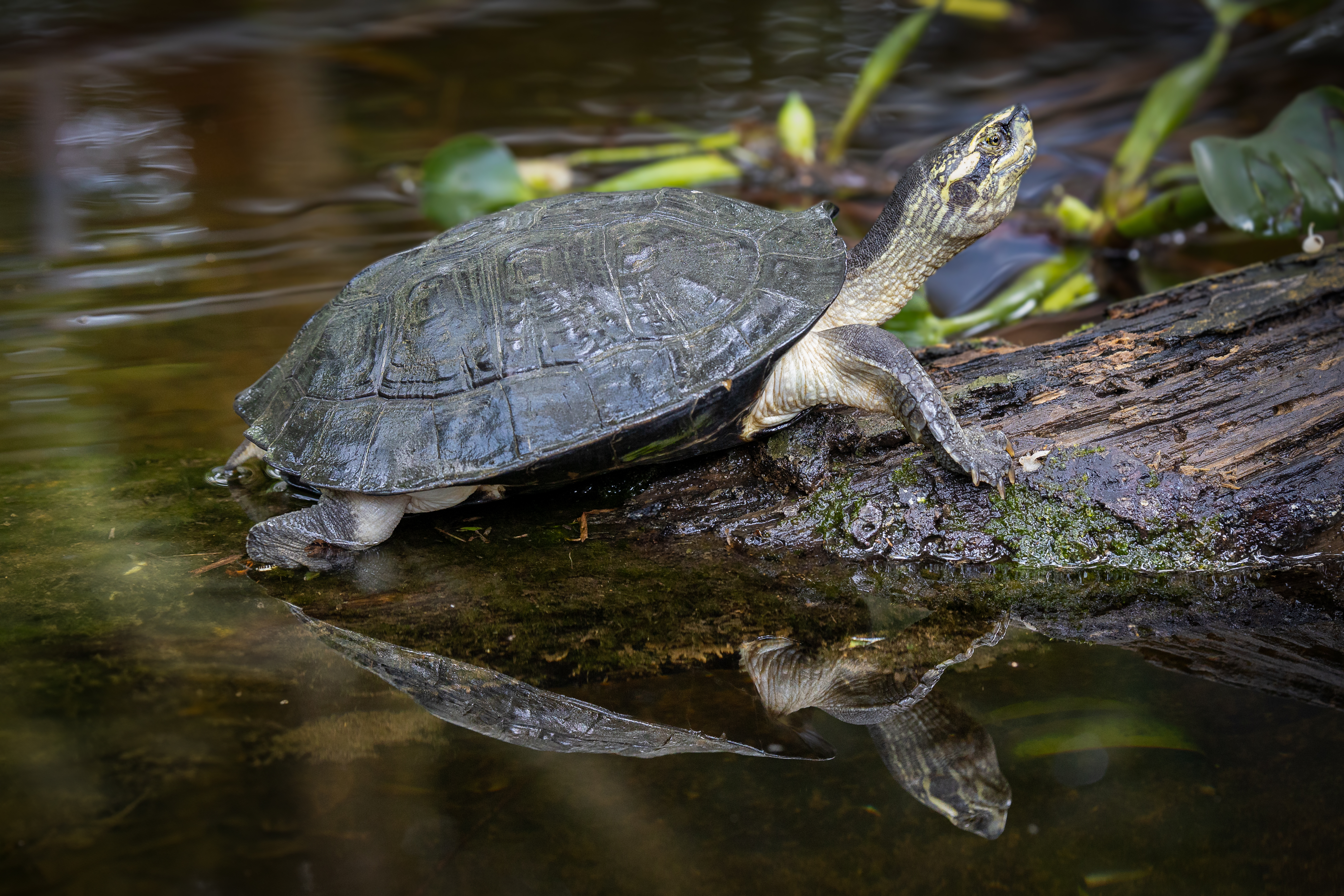
Giant Asian Pond Turtle
Heosemys grandis
Photo: Photo: Wikimedia Commons, CC BY-SA
Overview
A detailed profile for this species is sourced from the IUCN Red List of Threatened Species as assessments become available.
Heosemys grandis faces severe population decline primarily due to intensive collection for the international pet trade and traditional medicine markets. Habitat destruction from logging and agricultural conversion in its limited range across Cambodia, Laos, Thailand, and Vietnam has further fragmented remaining populations. The species' slow reproductive rate makes recovery particularly challenging once populations are depleted.
Habitat
This large turtle inhabits lowland tropical forests, preferring areas near streams and wetlands where it can access both terrestrial and aquatic resources. It requires dense canopy cover and leaf litter for foraging and nesting sites.
Conservation measures underway
Other threatened species in GEOEMYDIDAE


Threatened in Cambodia

Frequently asked questions
Why is Giant Asian Pond Turtle classified as Critically Endangered?
Where does Giant Asian Pond Turtle live?
What are the main threats to Giant Asian Pond Turtle?
Get weekly conservation intelligence
One short digest a week of the most striking species and country data we ship, plus breaking conservation news paired with our database where it matters.
Free, no spam. One-click unsubscribe in every email.