
Bottlenose Wedgefish
Rhynchobatus australiae
Photo: Wikimedia Commons (CC) via https://en.wikipedia.org/wiki/Rhynchobatus_australiae
Overview
Species Overview
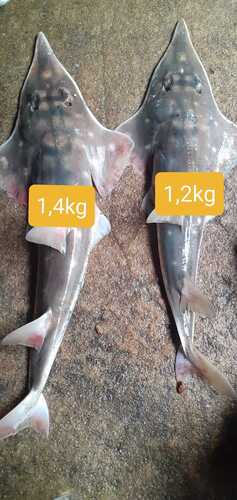
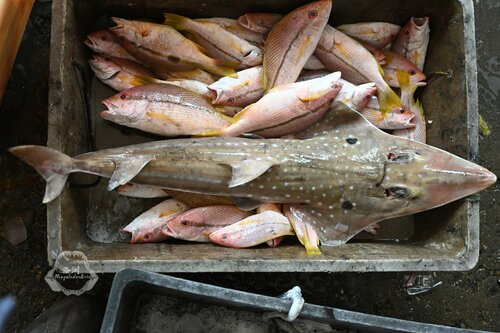
The bottlenose wedgefish is a large, shark-like ray characterized by a distinctive wedge-shaped snout, guitar-shaped body, and prominent dorsal fins resembling those of true sharks. It is a bottom-dwelling species typically found on continental and insular shelves, favoring sandy and muddy substrates near coral reefs, estuaries, and coastal waters. As a benthic predator, it feeds primarily on crustaceans, small fish, and mollusks, playing a role in regulating invertebrate populations within coastal marine ecosystems.
Range and Habitat
This species occupies a broad Indo-West Pacific range, spanning coastal marine waters from East Africa (Tanzania, Kenya, Mozambique, Madagascar) through the Middle East (Yemen), South and Southeast Asia (India, Sri Lanka, Myanmar, Thailand, Malaysia, Indonesia, Philippines, Singapore), to East Asia (China, Taiwan, Japan) and across Oceania (Australia, Papua New Guinea, Solomon Islands, Fiji, New Caledonia, Palau).
Threats
The primary driver of decline is unregulated and unsustainable fishing, both targeted and as bycatch, particularly for the international fin trade, where wedgefish fins are highly valued as substitutes for shark fin. Coastal habitat degradation from ecosystem modification and mangrove logging further reduces nursery and foraging grounds critical to juvenile survival.
Conservation Response
The species is listed under CITES Appendix II, regulating international trade. Some range states have implemented fishing restrictions, marine protected areas, and shark/ray-specific management plans, though enforcement remains inconsistent across its range.
Outlook
Population trends remain downward across most of its range due to sustained fishing pressure and habitat loss, with limited recovery evidence to date.
Bottlenose Wedgefish are mainly caught, both on purpose and accidentally, in fishing gear like nets and trawls used to catch other sea creatures. Their coastal and estuary habitats are also being altered by human activities such as land development near the water, while nearby logging operations can degrade the rivers and coastal areas the species depends on. These threats are ongoing and show no signs of easing, meaning the pressure on this species remains steady to worsening.
Habitat
This species inhabits shallow coastal waters of the Indo-Pacific, typically found on sandy and muddy substrates from nearshore areas to depths of approximately 60 meters. It prefers tropical and subtropical marine environments along continental shelves and around islands.
Conservation measures underway
Other threatened species in RHINIDAE

Threatened in Australia
Frequently asked questions
Why is Bottlenose Wedgefish classified as Critically Endangered?
Where does Bottlenose Wedgefish live?
What are the main threats to Bottlenose Wedgefish?
Get weekly conservation intelligence
One short digest a week of the most striking species and country data we ship, plus breaking conservation news paired with our database where it matters.
Free, no spam. One-click unsubscribe in every email.