
Smoothnose Wedgefish
Rhynchobatus laevis
Photo: Wikimedia Commons (CC) via https://en.wikipedia.org/wiki/Smoothnose_wedgefish
Overview
Rhynchobatus laevis is a large ray-like fish characterized by a shark-like body, a broad, guitar-shaped snout, and a flattened head fused to its pectoral fins. It can reach lengths of up to 3 meters and typically displays a grey to brown dorsal surface, sometimes marked with faint white spots, and a pale underside. As a bottom-dwelling predator, it feeds primarily on crustaceans, molluscs, and small bony fishes, using its specialized jaw structure to crush hard-shelled prey.
Its ecological role includes helping regulate benthic invertebrate populations in coastal ecosystems.
This species inhabits shallow marine waters, including sandy and muddy substrates near coral reefs, estuaries, and occasionally inland permanent rivers and streams. Its range spans the Indo-West Pacific and western Indian Ocean, including Australia, India, Singapore, Pakistan, South Africa, Sri Lanka, Seychelles, Thailand, China, Indonesia, Mozambique, Oman, and Japan.
The species faces severe pressure from targeted fishing for its fins and meat, both highly valued in international trade, as well as high rates of bycatch in commercial fisheries operating across its range. Coastal habitat degradation, driven partly by logging and broader ecosystem modification, has reduced nursery and feeding grounds. Its slow reproductive rate limits population recovery even where fishing pressure is reduced, and unregulated fishing persists in many range states lacking enforcement capacity.
Conservation measures include listing under CITES Appendix II, which regulates international trade in fins and derivative products, along with some national fishing restrictions and marine protected areas within parts of its range. Enforcement remains inconsistent.
Population trends indicate continued decline, and without stronger regional fisheries management, the species' long-term outlook remains precarious.
Smoothnose Wedgefish are heavily caught both on purpose (for their fins and meat) and accidentally as bycatch in commercial fishing nets, with much of this fishing poorly regulated or unmonitored. Their coastal habitats are also being degraded by activities like logging, land clearing, and other coastal development, while the species' slow reproduction makes it hard for populations to bounce back from these losses. These combined pressures appear to be ongoing and intensifying rather than easing.
Habitat
Rhynchobatus laevis inhabits tropical and subtropical coastal waters of the Indo-Pacific, typically found on sandy and muddy bottoms in shallow seas and estuaries. The species prefers depths ranging from nearshore waters to approximately 60 meters, often occurring in areas with soft substrates where it can bury itself while foraging.
Conservation measures underway
Other threatened species in RHINIDAE
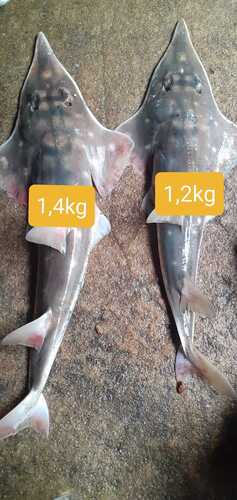

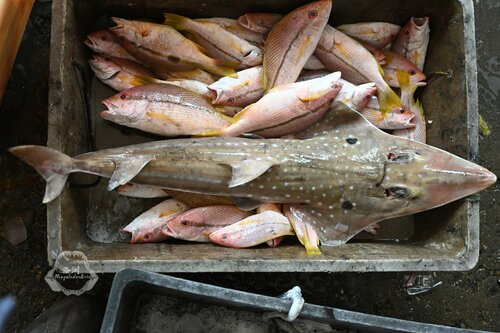
Threatened in Australia
Frequently asked questions
Why is Smoothnose Wedgefish classified as Critically Endangered?
Where does Smoothnose Wedgefish live?
What are the main threats to Smoothnose Wedgefish?
Get weekly conservation intelligence
One short digest a week of the most striking species and country data we ship, plus breaking conservation news paired with our database where it matters.
Free, no spam. One-click unsubscribe in every email.