Australian Humpback Dolphin
Sousa sahulensis
Overview
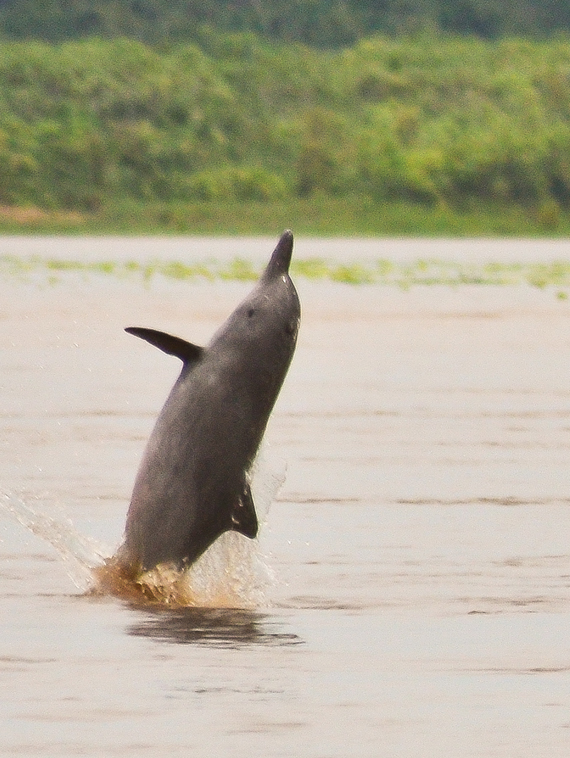
The Australian humpback dolphin is a medium-sized marine mammal recognizable by the distinctive fatty hump beneath its dorsal fin, which becomes more pronounced with age. Adults are typically grey, often with lighter mottling on the underside, and can reach lengths of around 2.7 meters. They live in small, fluid social groups, feeding on coastal fish and cephalopods using echolocation, and are frequently seen in shallow, turbid waters close to shore.
As a mid-level marine predator, the species contributes to the regulation of fish populations in coastal and estuarine ecosystems.
Its range spans the tropical and subtropical waters of northern Australia and southern Papua New Guinea, encompassing marine neritic and oceanic zones as well as coastal, supratidal, and adjoining freshwater habitats such as permanent rivers and estuaries. This reliance on nearshore environments places the species in close proximity to expanding human activity.
The species faces a wide range of ongoing pressures, including habitat loss and degradation from coastal urban and industrial development, aquaculture, mining, and agriculture. Shipping traffic and associated noise, light, and thermal pollution disturb critical habitat, while entanglement in fishing gear and bycatch from fisheries pose direct mortality risks. Invasive species and broader ecosystem modifications, including habitat shifting linked to environmental change, further compound these pressures.
Conservation efforts include habitat protection within marine protected areas, fisheries bycatch mitigation measures, and ongoing population monitoring and research to clarify distribution and abundance. Precise population figures remain limited.
Given the breadth and persistence of threats across its coastal range, the population is assessed as decreasing, and long-term recovery will depend on sustained management of coastal development and fisheries interactions.
Australian Humpback Dolphins are mainly threatened by coastal habitat loss as shorelines are developed for housing, industry, and farming, along with disturbance from boat traffic, fishing gear entanglement, and noise and light pollution in their nearshore waters. They also face risks from aquaculture operations, mining activity near coastlines, and broader environmental changes such as shifting habitats and natural events like tsunamis. Overall, these pressures appear to be ongoing and stable rather than clearly worsening, though the wide range of coastal human activities affecting them means continued monitoring is important.
Habitat
Conservation measures underway
Other threatened species in DELPHINIDAE


Threatened in Australia
Frequently asked questions
Why is Australian Humpback Dolphin classified as Vulnerable?
Where does Australian Humpback Dolphin live?
What are the main threats to Australian Humpback Dolphin?
Get weekly conservation intelligence
One short digest a week of the most striking species and country data we ship, plus breaking conservation news paired with our database where it matters.
Free, no spam. One-click unsubscribe in every email.