
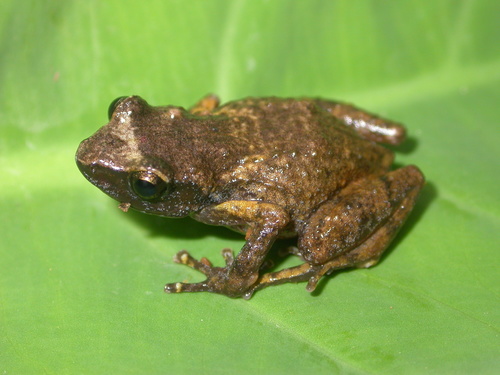
Turquino Streamfrog
Eleutherodactylus turquinensis
Photo: Wikimedia Commons (CC) via https://en.wikipedia.org/wiki/Eleutherodactylus_turquinensis
Overview
Eleutherodactylus turquinensis is a critically endangered frog species endemic to the Sierra Maestra mountain range in southeastern Cuba, specifically associated with Pico Turquino, Cuba's highest peak. This small terrestrial frog belongs to the diverse genus Eleutherodactylus, commonly known as rain frogs or coquis, which are characterized by their direct development without a free-swimming tadpole stage. The species inhabits high-elevation montane forests where it depends on the cool, humid microclimate provided by dense vegetation and leaf litter.
Like many Caribbean endemic amphibians, E. turquinensis faces severe threats from habitat degradation and climate change. The montane forests of the Sierra Maestra have experienced pressure from agricultural expansion, logging, and human settlement, reducing the available habitat for this specialized species.
Climate change poses an additional threat as rising temperatures and altered precipitation patterns can disrupt the delicate moisture balance required for the species' survival and reproduction. The frog's restricted range makes it particularly vulnerable to environmental changes, as populations have limited opportunities for dispersal to suitable alternative habitats. Conservation efforts for this species are complicated by its remote mountain habitat and Cuba's limited resources for biodiversity research and protection.
The species' critically endangered status reflects both its small population size and the ongoing threats to its mountain forest ecosystem, highlighting the urgent need for habitat protection and species-specific conservation measures.
Eleutherodactylus turquinensis faces primary threats from habitat loss due to deforestation, agricultural expansion, and human development in Cuba's Sierra Maestra mountains. Climate change compounds these pressures by altering the temperature and humidity conditions essential for this montane species' survival.
Habitat
This species inhabits high-elevation montane forests in the Sierra Maestra mountain range of southeastern Cuba. It requires cool, humid conditions with dense vegetation cover and abundant leaf litter typical of cloud forest environments.
Conservation measures underway
Other threatened species in ELEUTHERODACTYLIDAE

Threatened in Cuba
Frequently asked questions
Why is Turquino Streamfrog classified as Critically Endangered?
Where does Turquino Streamfrog live?
What are the main threats to Turquino Streamfrog?
Get weekly conservation intelligence
One short digest a week of the most striking species and country data we ship, plus breaking conservation news paired with our database where it matters.
Free, no spam. One-click unsubscribe in every email.