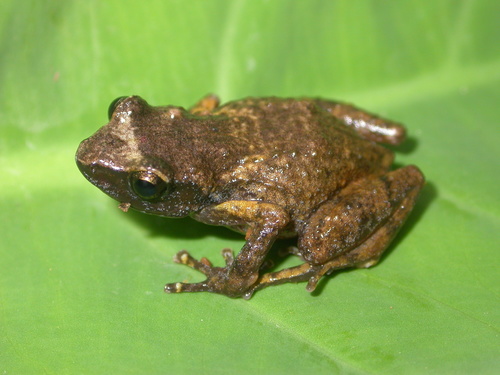
Eleutherodactylus manantlanensis
Local name: Sierra Manantlán Trilling Frog
Photo: (c) Chris Gruenwald Herp.mx, some rights reserved (CC BY-NC), uploaded by Chris Gruenwald Herp.mx
Overview
Eleutherodactylus manantlanensis is a critically endangered frog species endemic to the Sierra de Manantlán region in western Mexico. This small terrestrial frog belongs to the diverse genus Eleutherodactylus, commonly known as rain frogs or robber frogs, which are characterized by their direct development without a free-swimming tadpole stage. The species was first described from the cloud forests of the Sierra de Manantlán Biosphere Reserve, located along the border of Jalisco and Colima states.
Like other members of its genus, E. manantlanensis likely reproduces through direct development, with eggs laid in moist terrestrial environments that hatch directly into miniature frogs. The species faces severe threats from habitat destruction and fragmentation due to agricultural expansion, logging, and human settlement in the montane regions it inhabits.
Climate change poses an additional threat, as shifts in temperature and precipitation patterns can alter the delicate moisture conditions required by this species. The Sierra de Manantlán's cloud forest ecosystem is particularly vulnerable to climate-induced changes. Conservation efforts focus on habitat protection within the existing biosphere reserve, though the species' extremely limited range makes it highly vulnerable to local extinctions.
Research on the species' ecology, population status, and specific habitat requirements remains limited, hampering targeted conservation strategies. The current population trend is unknown, reflecting the need for systematic monitoring programs to assess the species' status and guide conservation actions.
Eleutherodactylus manantlanensis faces severe threats from habitat destruction caused by agricultural expansion, logging, and human development in its montane forest habitat. Climate change compounds these pressures by altering the moisture and temperature conditions essential for this cloud forest species' survival.
Habitat
This species inhabits cloud forests in the Sierra de Manantlán region of western Mexico, occurring in moist montane environments with high humidity and stable temperatures. The species is associated with the leaf litter and understory vegetation of these specialized high-elevation forest ecosystems.
Conservation measures underway
Other threatened species in ELEUTHERODACTYLIDAE

Threatened in Mexico
Frequently asked questions
Why is Sierra Manantlán Trilling Frog classified as Critically Endangered?
Where does Sierra Manantlán Trilling Frog live?
What are the main threats to Sierra Manantlán Trilling Frog?
Get weekly conservation intelligence
One short digest a week of the most striking species and country data we ship, plus breaking conservation news paired with our database where it matters.
Free, no spam. One-click unsubscribe in every email.