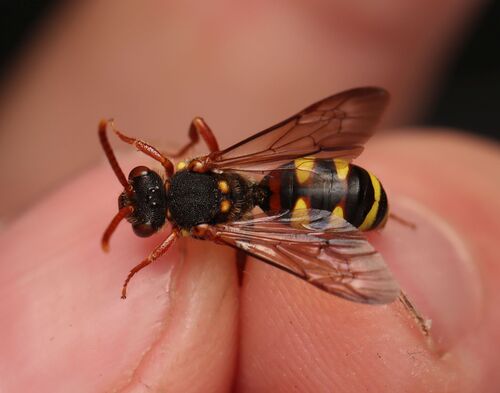
Small Guernsey Nomad Bee
Nomada fuscicornis
Overview
A detailed profile for this species is sourced from the IUCN Red List of Threatened Species as assessments become available.
The Small Guernsey Nomad Bee faces severe population decline due to the loss of coastal grassland and heathland habitats on the Channel Islands, particularly through agricultural intensification and urban development. As a cuckoo bee species that parasitizes specific solitary bee hosts, it is doubly vulnerable to habitat degradation that affects both its own foraging requirements and the nesting sites of its host species. Climate change poses additional risks through altered flowering phenology and potential sea-level rise affecting coastal breeding areas.
Habitat
This species inhabits coastal grasslands, heathlands, and cliff-top areas of the Channel Islands, particularly areas with abundant wildflowers and the presence of its solitary bee hosts. It requires diverse flowering plants for nectar sources and suitable nesting habitat for its host species, typically in sandy or well-drained soils near the coast.
Other threatened species in Apidae
Threatened in Armenia


Frequently asked questions
Why is Small Guernsey Nomad Bee classified as Vulnerable?
Where does Small Guernsey Nomad Bee live?
What are the main threats to Small Guernsey Nomad Bee?
Get weekly conservation intelligence
One short digest a week of the most striking species and country data we ship, plus breaking conservation news paired with our database where it matters.
Free, no spam. One-click unsubscribe in every email.