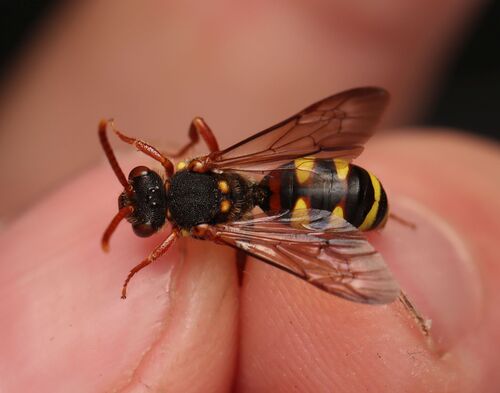
Guernsey Nomad Bee
Nomada similis
Overview
A detailed profile for this species is sourced from the IUCN Red List of Threatened Species as assessments become available.
The Guernsey Nomad Bee faces severe habitat loss due to agricultural intensification and urban development across its limited range in the Channel Islands and coastal Europe. As a cuckoo bee that parasitizes specific mining bee hosts, it is particularly vulnerable to the decline of its host species caused by pesticide use and loss of flower-rich grasslands. Climate change poses an additional threat by altering the timing of emergence between this species and its hosts, potentially disrupting critical reproductive cycles.
Habitat
This nomad bee inhabits coastal grasslands, cliff-top meadows, and sandy areas with abundant wildflowers, particularly in the Channel Islands and select coastal regions of western Europe. It requires proximity to the nesting sites of its host mining bees, typically in well-drained soils with sparse vegetation cover.
Other threatened species in Apidae
Threatened in Austria
Frequently asked questions
Why is Guernsey Nomad Bee classified as Vulnerable?
Where does Guernsey Nomad Bee live?
What are the main threats to Guernsey Nomad Bee?
Get weekly conservation intelligence
One short digest a week of the most striking species and country data we ship, plus breaking conservation news paired with our database where it matters.
Free, no spam. One-click unsubscribe in every email.