Nomada siciliensis
Overview
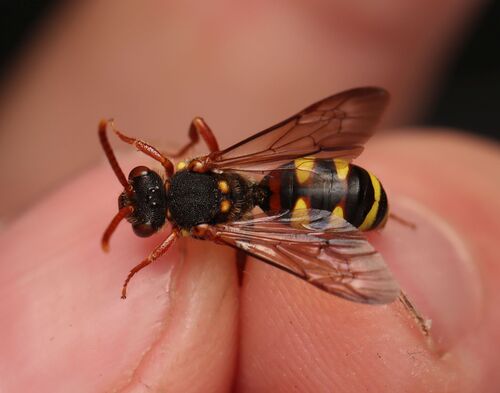
Nomada siciliensis is a critically endangered cuckoo bee species endemic to Sicily, representing one of Europe's most threatened solitary bee species. This small parasitic bee, measuring approximately 8-10mm in length, displays the characteristic yellow and black striped pattern typical of Nomada species, with females showing slightly more robust builds than males. The species exhibits highly specialized parasitic behavior, infiltrating the nests of specific ground-nesting bee hosts to lay their eggs, with larvae subsequently consuming the host's provisions.
Nomada siciliensis inhabits Mediterranean scrubland and coastal areas of Sicily, particularly favoring areas with sparse vegetation and exposed soil where their host species construct underground nests. The bee's flight period is restricted to late spring and early summer, coinciding with the nesting activities of their hosts. As a Critically Endangered species under IUCN classification, Nomada siciliensis faces severe population pressures from habitat destruction, agricultural intensification, and the decline of their specific host bee species.
The species' extremely limited geographic range makes it particularly vulnerable to local environmental changes. Recent surveys have documented the species from only a handful of locations across Sicily, representing a dramatic range contraction from historical records. Conservation efforts are beginning to focus on habitat restoration in key areas, and the species' inclusion in European biodiversity monitoring programs provides hope for targeted protection measures that could stabilize remaining populations.
Nomada siciliensis faces extinction primarily due to the conversion of Mediterranean scrubland to intensive agriculture and urban development across Sicily. The species' parasitic lifestyle creates a double vulnerability, as population declines depend not only on suitable habitat for the cuckoo bee itself but also on maintaining healthy populations of their specific ground-nesting host species. Pesticide use in agricultural areas has severely impacted both the parasitic bee and its hosts, while coastal development has eliminated critical nesting sites in the species' preferred low-elevation habitats.
Habitat
This species inhabits Mediterranean scrubland, coastal grasslands, and semi-arid areas of Sicily with sparse vegetation and well-drained soils. The bees require proximity to nesting sites of their ground-dwelling host species, typically found in areas with exposed earth and minimal human disturbance.
Other threatened species in Apidae
Frequently asked questions
Why is Nomada siciliensis classified as Critically Endangered?
Where does Nomada siciliensis live?
What are the main threats to Nomada siciliensis?
Get weekly conservation intelligence
One short digest a week of the most striking species and country data we ship, plus breaking conservation news paired with our database where it matters.
Free, no spam. One-click unsubscribe in every email.