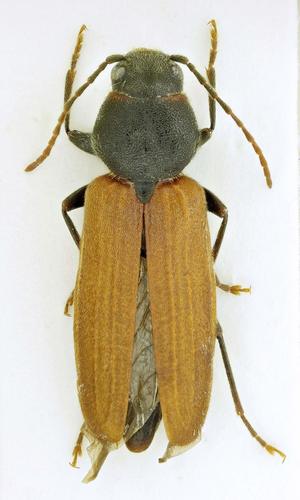
Asemum tenuicorne
Photo: (c) Jacek Kurzawa, some rights reserved (CC BY), uploaded by Jacek Kurzawa
Overview
The slät barkbock (Asemum tenuicorne) is a longhorn beetle species belonging to the family Cerambycidae. This wood-boring beetle is characterized by its elongated antennae and cylindrical body shape typical of longhorn beetles. The species is found in Scandinavian coniferous forests, where it develops in dead and dying wood of various conifer species.
Adult beetles emerge during summer months and are active for a relatively short period. The larvae bore through the wood, creating galleries as they feed and develop over multiple years. The species plays an ecological role in forest decomposition processes, helping to break down dead wood material.
Asemum tenuicorne is currently classified as Critically Endangered on the IUCN Red List, indicating an extremely high risk of extinction in the wild. The primary threats to this species include habitat loss through intensive forestry practices that remove dead wood from forest ecosystems, forest fragmentation, and changes in forest management that reduce the availability of suitable breeding substrates. Climate change may also impact the species through alterations to forest composition and the availability of host trees.
The beetle's dependence on specific microhabitat conditions within coniferous forests makes it particularly vulnerable to environmental changes. Conservation efforts focus on maintaining dead wood in managed forests and protecting old-growth forest remnants that provide suitable habitat conditions for the species' survival and reproduction.
The slät barkbock faces severe threats from intensive forestry practices that remove dead wood from forests, eliminating essential breeding habitat. Forest fragmentation and changes in forest management further reduce the availability of suitable substrates needed for larval development.
Habitat
This species inhabits Scandinavian coniferous forests where it depends on dead and dying wood of conifer trees for breeding and larval development. The beetle requires specific microhabitat conditions within forest ecosystems that maintain adequate amounts of decaying wood material.
Other threatened species in Cerambycidae


Threatened in Austria
Frequently asked questions
Why is Asemum tenuicorne classified as Critically Endangered?
Where does Asemum tenuicorne live?
What are the main threats to Asemum tenuicorne?
Get weekly conservation intelligence
One short digest a week of the most striking species and country data we ship, plus breaking conservation news paired with our database where it matters.
Free, no spam. One-click unsubscribe in every email.