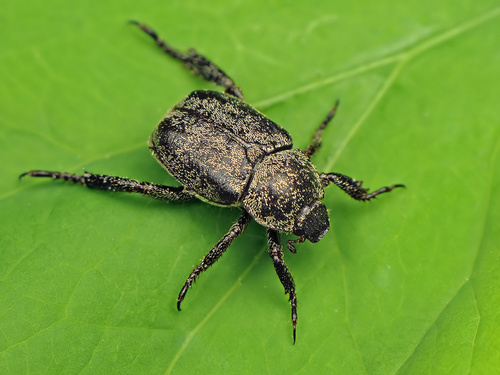
Hoplia graminicola
Photo: Photo: (c) Ryszard, some rights reserved (CC BY-NC)
Overview
The Sandoldenborre (Hoplia graminicola) is a critically endangered beetle species belonging to the scarab beetle family. This small, metallic-colored beetle is endemic to specific sandy grassland habitats in northern Europe, particularly in Denmark and parts of Scandinavia. The species exhibits a specialized lifecycle closely tied to its sandy soil environment, where larvae develop in the root systems of native grasses and adults emerge during brief seasonal periods.
Hoplia graminicola has experienced severe population declines due to habitat loss and fragmentation of its specialized sandy grassland ecosystems. Urban development, agricultural intensification, and changes in land management practices have significantly reduced the availability of suitable breeding sites. The species' narrow habitat requirements and limited dispersal ability make it particularly vulnerable to environmental changes.
Climate change may further threaten remaining populations by altering the delicate soil and vegetation conditions the beetle requires. Conservation efforts focus on protecting and restoring sandy grassland habitats, implementing appropriate grazing regimes to maintain optimal vegetation structure, and establishing habitat corridors to connect fragmented populations. Several European countries have included the species in national biodiversity action plans, and targeted habitat management programs are being developed.
Research continues into the species' specific ecological requirements to inform more effective conservation strategies. The Sandoldenborre's critical status highlights the broader challenges facing specialized invertebrate species dependent on increasingly rare habitat types across Europe.
The Sandoldenborre faces severe threats from habitat loss and fragmentation as sandy grasslands are converted for urban development and intensive agriculture. Changes in traditional land management practices and climate-induced alterations to soil conditions further threaten the species' specialized habitat requirements.
Habitat
Hoplia graminicola inhabits sandy grasslands and heathlands with sparse vegetation and well-drained soils. The species requires specific soil conditions and native grass species for larval development and adult feeding.
Other threatened species in Scarabaeidae
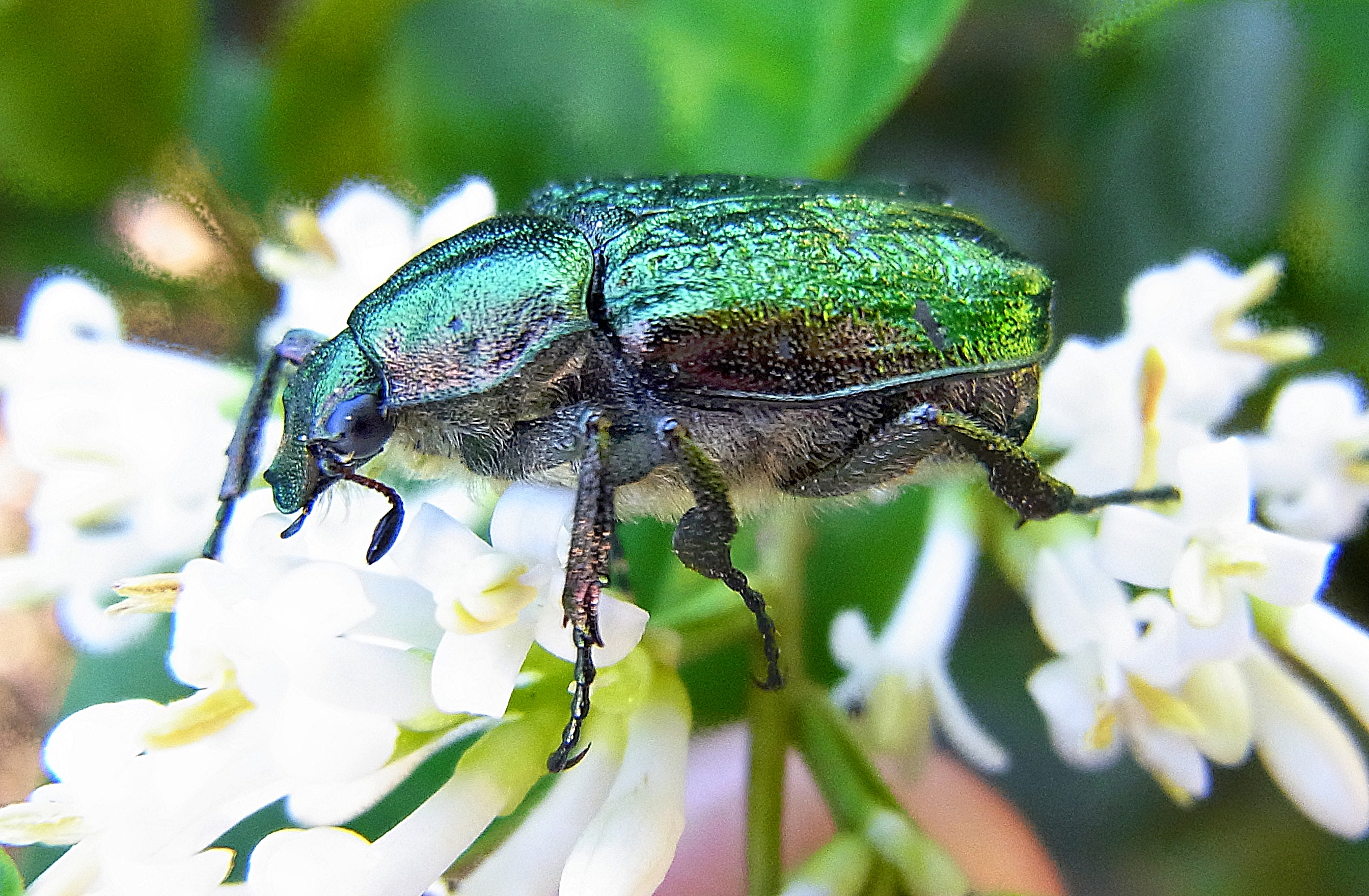
Threatened in Austria
Frequently asked questions
Why is Hoplia graminicola classified as Critically Endangered?
Where does Hoplia graminicola live?
What are the main threats to Hoplia graminicola?
Get weekly conservation intelligence
One short digest a week of the most striking species and country data we ship, plus breaking conservation news paired with our database where it matters.
Free, no spam. One-click unsubscribe in every email.