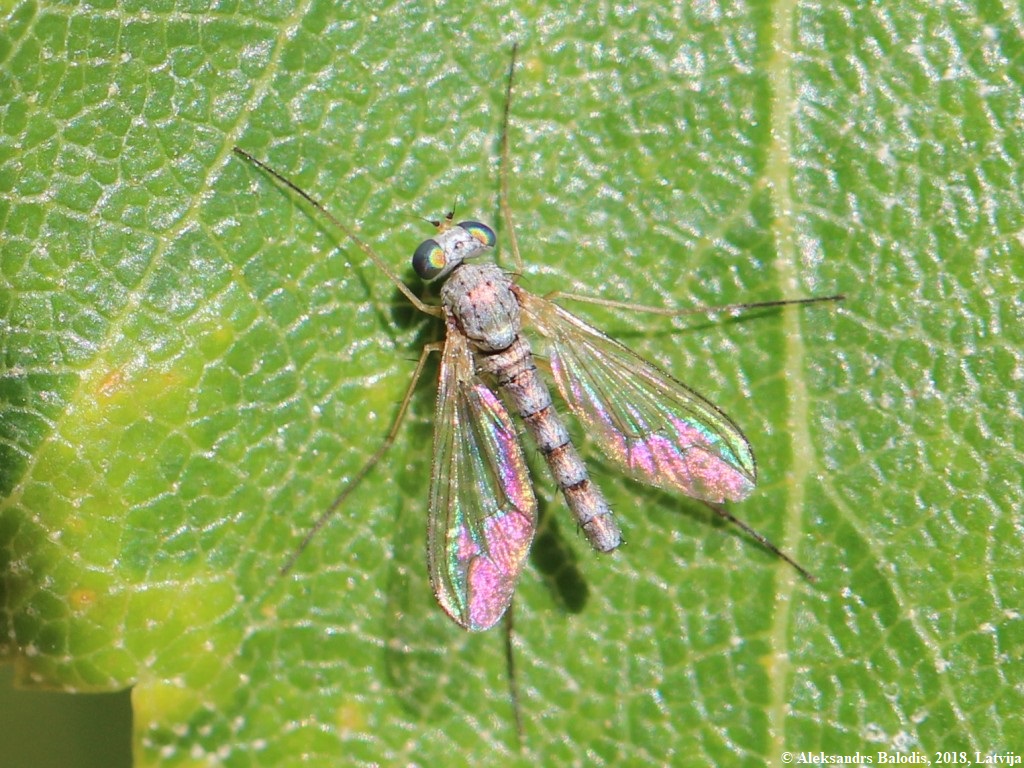
Sciapus maritimus
Photo: Wikimedia Commons (CC) via https://en.wikipedia.org/wiki/Sciapus_maritimus
Overview
A detailed profile for this species is sourced from the IUCN Red List of Threatened Species as assessments become available.
Sciapus maritimus faces severe threats from coastal development and habitat modification along its restricted Mediterranean range. Rising sea levels and increased storm intensity associated with climate change directly impact the species' narrow coastal zone habitats. Tourism infrastructure development and urbanization of coastal areas have fragmented and destroyed critical breeding and foraging sites.
Habitat
This species inhabits coastal sand dunes, salt marshes, and maritime grasslands along Mediterranean shorelines. It requires specific microhabitat conditions found in the transition zones between terrestrial and marine environments.
Other threatened species in Dolichopodidae
Threatened in Belarus


Frequently asked questions
Why is Sciapus maritimus classified as Endangered?
Where does Sciapus maritimus live?
What are the main threats to Sciapus maritimus?
Get weekly conservation intelligence
One short digest a week of the most striking species and country data we ship, plus breaking conservation news paired with our database where it matters.
Free, no spam. One-click unsubscribe in every email.