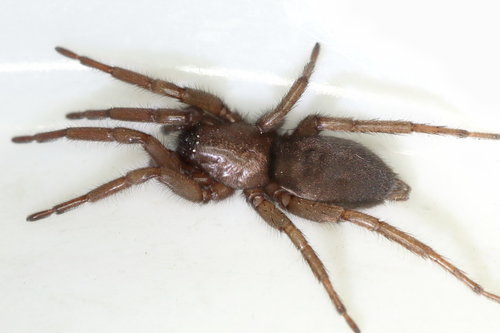
Haplodrassus cognatus
Photo: (c) Lutautami, niektoré práva vyhradené (CC BY-NC), uploaded by Lutautami
Overview
The schorsmuisspin (Haplodrassus cognatus) is a critically endangered ground spider endemic to the Netherlands. This small arachnid belongs to the family Gnaphosidae, commonly known as ground spiders, which are typically nocturnal hunters that construct silk retreats rather than webs for prey capture. The species was historically found in coastal dune systems and sandy heathlands, where it inhabited areas with sparse vegetation and loose, well-drained soils.
The schorsmuisspin's extremely restricted distribution and specialized habitat requirements have made it particularly vulnerable to environmental changes. The species faces severe threats from habitat loss and degradation, primarily due to coastal development, recreational activities, and changes in land management practices. Natural succession leading to increased vegetation density has also reduced suitable habitat, as the species requires open, sparsely vegetated areas.
Climate change may pose additional pressures through altered precipitation patterns and temperature regimes affecting its coastal dune ecosystem. The species' population trend remains unknown due to limited monitoring data, though its critical conservation status reflects the severity of threats and rarity of confirmed sightings. Conservation efforts focus on habitat management within protected areas, including vegetation control to maintain open sandy conditions suitable for the species.
Research initiatives aim to better understand the species' ecology, distribution, and specific habitat requirements to inform targeted conservation strategies and potentially locate additional populations.
The schorsmuisspin faces severe threats from habitat loss due to coastal development and recreational activities in its specialized dune ecosystem. Natural vegetation succession that increases plant density also reduces suitable open sandy habitat. Climate change may further impact the species through altered environmental conditions in coastal areas.
Habitat
The schorsmuisspin inhabits coastal dune systems and sandy heathlands with sparse vegetation and well-drained, loose soils. The species requires open areas with minimal plant cover, typically found in dynamic coastal environments.
Other threatened species in Gnaphosidae
Threatened in Åland Islands


Frequently asked questions
Why is Haplodrassus cognatus classified as Critically Endangered?
Where does Haplodrassus cognatus live?
What are the main threats to Haplodrassus cognatus?
Get weekly conservation intelligence
One short digest a week of the most striking species and country data we ship, plus breaking conservation news paired with our database where it matters.
Free, no spam. One-click unsubscribe in every email.