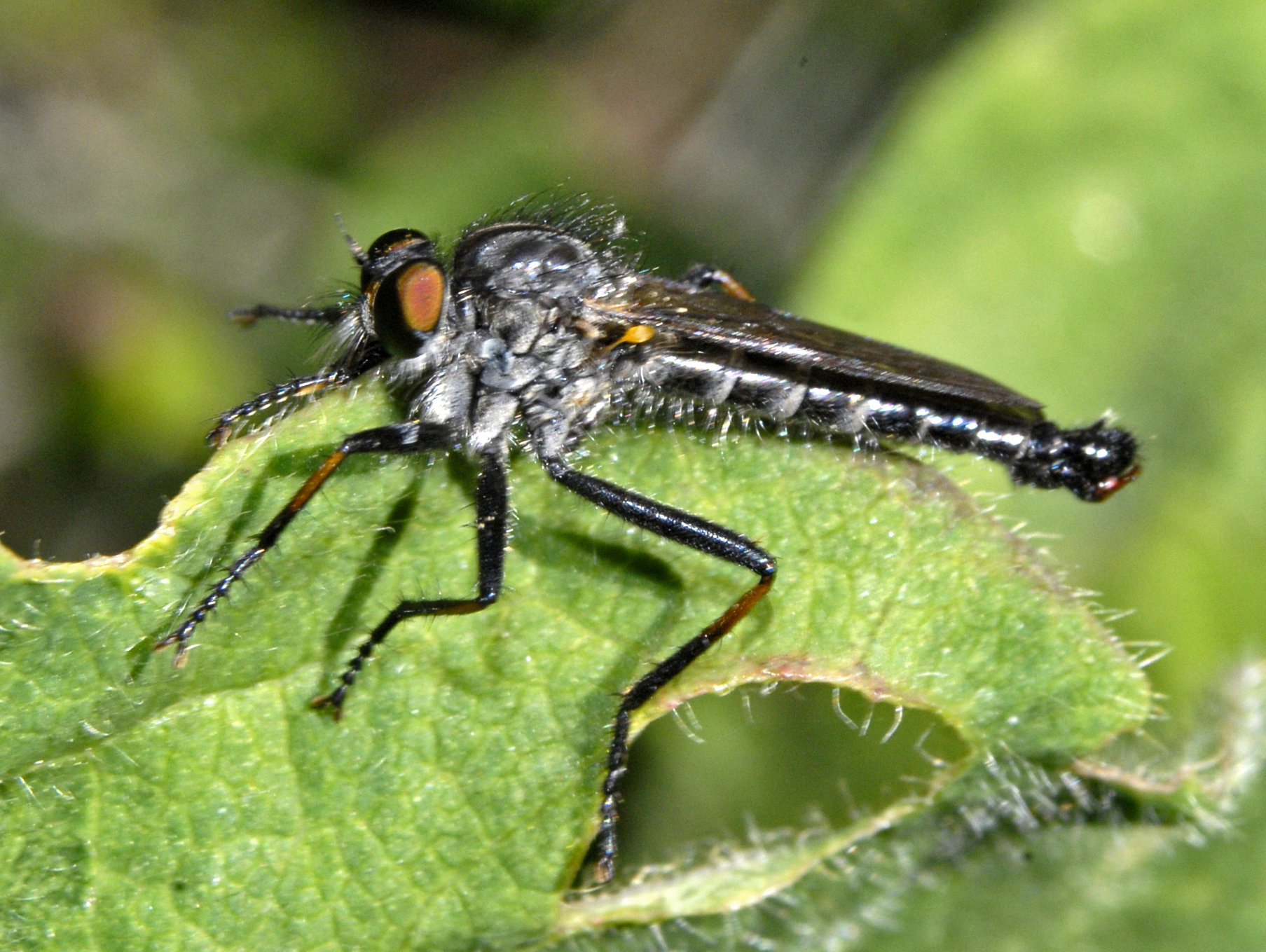
Scarce Awl Robberfly
Neoitamus cothurnatus
Photo: Wikimedia Commons (CC) via https://en.wikipedia.org/wiki/Neoitamus_cothurnatus
Overview
The Scarce Awl Robberfly (Neoitamus cothurnatus) is a predatory dipteran insect belonging to the family Asilidae, commonly known as robber flies. This species is characterized by its distinctive hunting behavior, capturing other flying insects in mid-air before consuming them. The Scarce Awl Robberfly has a limited distribution range and is currently classified as Critically Endangered by the IUCN, making it one of the most threatened robber fly species.
The species inhabits specific woodland edge environments and requires particular microhabitat conditions for successful reproduction and survival. Adults are active during warm summer months when they hunt for prey and engage in mating behaviors. The species faces significant threats from habitat loss and degradation, particularly the destruction of its preferred woodland edge habitats through agricultural intensification and urban development.
Climate change may also impact the species through alterations to its habitat conditions and prey availability. The fragmented nature of remaining suitable habitats poses additional challenges for population connectivity and genetic diversity. Conservation efforts for this species are limited due to its obscure nature and the general lack of focused invertebrate conservation programs.
Protection of remaining woodland edge habitats and restoration of degraded areas represent the primary conservation approaches. Research into the species' specific ecological requirements and population status is needed to develop more targeted conservation strategies and better understand the factors contributing to its critical conservation status.
The Scarce Awl Robberfly faces primary threats from habitat loss and degradation, particularly the destruction of woodland edge environments through agricultural intensification and urban development. Climate change may further impact the species by altering habitat conditions and affecting prey availability.
Habitat
The species inhabits woodland edge environments, requiring specific microhabitat conditions that provide suitable hunting grounds and breeding sites. These transitional zones between woodland and open areas offer the particular environmental conditions necessary for the species' survival.
Other threatened species in Asilidae


Threatened in Austria
Frequently asked questions
Why is Scarce Awl Robberfly classified as Critically Endangered?
Where does Scarce Awl Robberfly live?
What are the main threats to Scarce Awl Robberfly?
Get weekly conservation intelligence
One short digest a week of the most striking species and country data we ship, plus breaking conservation news paired with our database where it matters.
Free, no spam. One-click unsubscribe in every email.