
Scalloped Bonnethead
Sphyrna corona
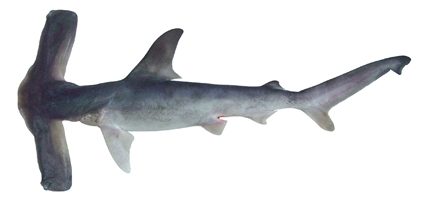
Photo: Wikimedia Commons (CC) via https://en.wikipedia.org/wiki/Scalloped_bonnethead
Overview
Sphyrna corona, commonly known as the scalloped bonnethead or crown hammerhead, is a small species of hammerhead shark endemic to the eastern Pacific Ocean. This distinctive shark is characterized by its uniquely shaped cephalofoil (hammer-shaped head structure) that is more rounded and less elongated than other hammerhead species. The species inhabits shallow coastal waters, estuaries, and mangrove areas along the Pacific coast from southern Mexico to Ecuador, with particular concentrations in the Gulf of California.
Adult scalloped bonnetheads typically reach lengths of up to one meter and feed primarily on small fish, crustaceans, and mollusks. The species faces severe population declines due to intensive fishing pressure, both as targeted catch and bycatch in artisanal and commercial fisheries throughout its range. Habitat degradation, particularly the destruction of mangrove ecosystems and coastal development, further threatens remaining populations.
The species' limited geographic range and specific habitat requirements make it particularly vulnerable to environmental changes and human activities. Conservation efforts include fishing regulations in some areas and habitat protection measures, though enforcement remains challenging. Research initiatives focus on population monitoring and understanding the species' ecological requirements.
The scalloped bonnethead's critical conservation status reflects the broader challenges facing small coastal shark species in heavily exploited marine environments, highlighting the urgent need for comprehensive management strategies.
Sphyrna corona faces severe population declines primarily due to intensive fishing pressure as both targeted catch and bycatch in artisanal and commercial fisheries throughout its limited range. Habitat destruction, particularly mangrove degradation and coastal development, compounds these pressures by eliminating critical nursery and feeding areas.
Habitat
This species inhabits shallow coastal waters, estuaries, and mangrove systems along the eastern Pacific coast from southern Mexico to Ecuador. It shows particular preference for nearshore environments with soft substrates where it can forage for small fish, crustaceans, and mollusks.
Conservation measures underway
Other threatened species in SPHYRNIDAE

Threatened in Colombia
Frequently asked questions
Why is Scalloped Bonnethead classified as Critically Endangered?
Where does Scalloped Bonnethead live?
What are the main threats to Scalloped Bonnethead?
Get weekly conservation intelligence
One short digest a week of the most striking species and country data we ship, plus breaking conservation news paired with our database where it matters.
Free, no spam. One-click unsubscribe in every email.