Smalleye Hammerhead
Sphyrna tudes
Overview
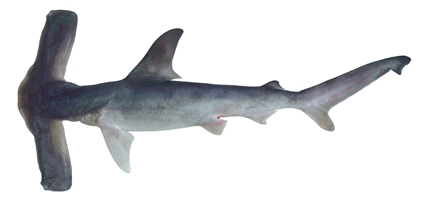
The smalleye hammerhead, also called the golden hammerhead or curry shark, is a small species of hammerhead shark in the family Sphyrnidae. This species was historically common in the shallow coastal waters of the western Atlantic Ocean, from Venezuela to Uruguay. It favors muddy habitats with poor visibility, reflected by its relatively small eyes.
Adult males and juveniles are schooling and generally found apart from the solitary adult females. Typically reaching 1.2–1.3 m (3.9–4.3 ft) in length, this shark has a unique, bright golden color on its head, sides, and fins, which was only scientifically documented in the 1980s. As in all hammerheads, its head is flattened and laterally expanded into a hammer-shaped structure called the cephalofoil, which in this species is wide and long with an arched front margin bearing central and lateral indentations.
The smalleye hammerhead shark faces severe population declines primarily due to intensive fishing pressure throughout its range in the western Atlantic. This species is particularly vulnerable to both targeted fishing and bycatch in gillnet and longline fisheries, with its shallow coastal habitat overlapping extensively with high-intensity fishing zones. The species' slow reproductive rate and late maturity make population recovery extremely difficult once depleted.
Habitat
The smalleye hammerhead inhabits shallow coastal waters, continental shelves, and nearshore environments in the western Atlantic Ocean. This species typically occurs in waters less than 40 meters deep, preferring sandy and muddy bottoms where it feeds on small fish, crustaceans, and cephalopods.
Conservation measures underway
Other threatened species in SPHYRNIDAE

Threatened in Algeria


Frequently asked questions
Why is Smalleye Hammerhead classified as Critically Endangered?
Where does Smalleye Hammerhead live?
What are the main threats to Smalleye Hammerhead?
Get weekly conservation intelligence
One short digest a week of the most striking species and country data we ship, plus breaking conservation news paired with our database where it matters.
Free, no spam. One-click unsubscribe in every email.