Sand Tiger Shark
Carcharias taurus
Overview
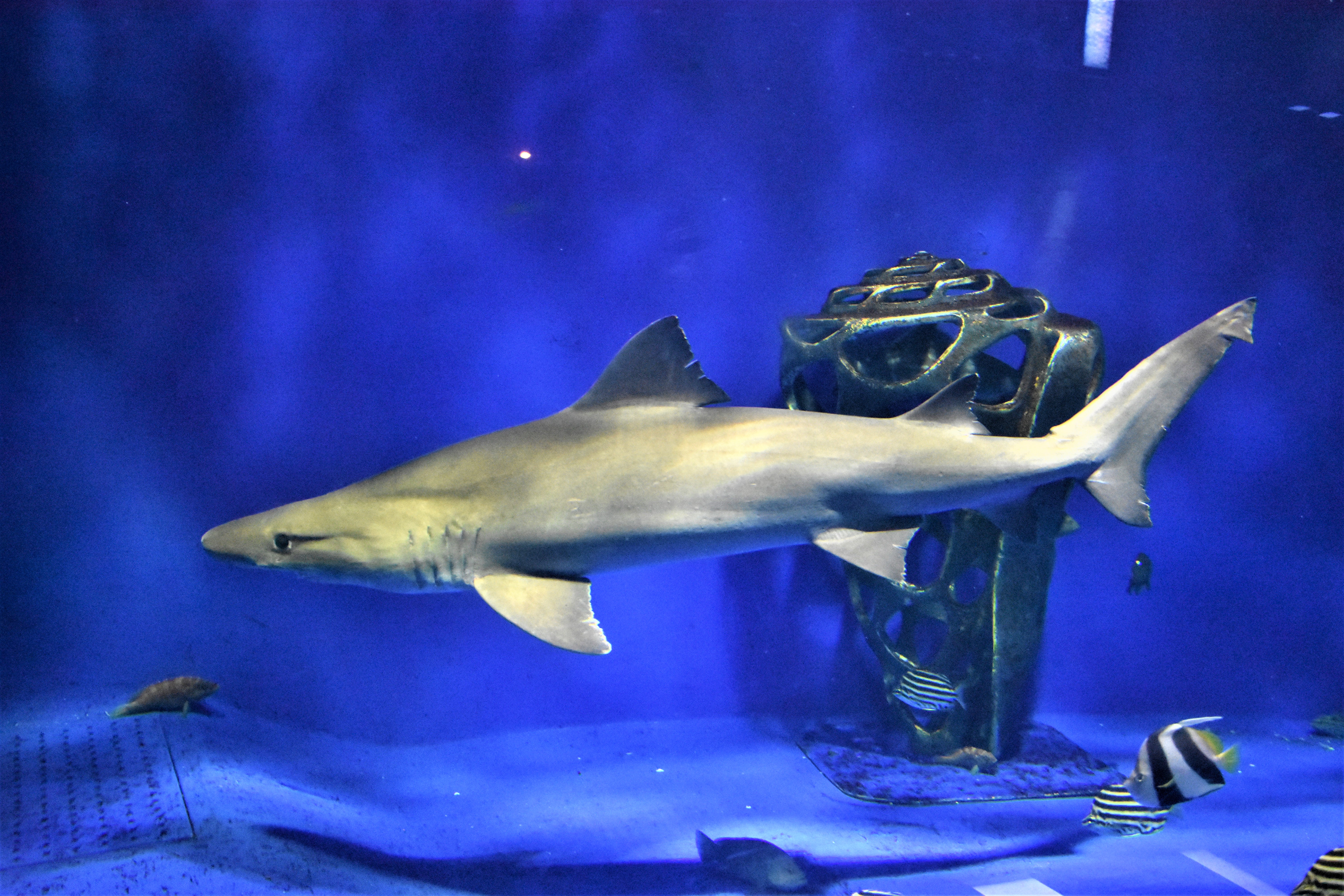
Despite its fearsome appearance, the sand tiger shark is a large-bodied, slow-moving predator recognized by its pointed snout, protruding rows of narrow teeth, and grey-brown coloration with scattered darker spots. Individuals often hover motionless in the water column by gulping air at the surface to maintain neutral buoyancy, a behavior unique among sharks. Typically found near the seabed in shallow coastal waters, rocky reefs, and sand ridges, they also range into deeper oceanic zones.
As mid-to-upper level predators, they help regulate populations of fish and invertebrates, contributing to the stability of coastal marine food webs. Their reproductive strategy is notably conservative: embryos exhibit intrauterine cannibalism, with only one or two pups surviving per litter after a long gestation, resulting in very low reproductive output.
The species has an extensive global range, occurring in coastal and shelf waters across the Atlantic, Indian, and Pacific Oceans, spanning dozens of countries from South Africa and Australia to the United States and Brazil. It favors rocky reefs, sandy bottoms, and nearshore marine oceanic habitats.
Population declines are driven by targeted and incidental fishing, habitat degradation from coastal development and pollution, and shifts in habitat linked to environmental change. Aquaculture expansion and coastal logging activities further degrade nursery habitats.
Conservation responses include regional fishing bans, protected area designations, and international trade monitoring under CITES. Some populations, notably off South Africa and Australia, are subject to long-term monitoring programs.
Given its low reproductive rate and continued fishing pressure, the species' population trend remains decreasing, and recovery is expected to be slow even with active protections.
Sand Tiger Sharks are mainly threatened by being caught, both on purpose and accidentally, in fishing nets and gear, as well as by pollution and changes to their coastal habitats from human activity and development. Nearby logging and land-use changes can also degrade the coastal waters and nursery areas these sharks depend on. These threats appear to be ongoing and stable rather than clearly worsening or improving.
Habitat
Sand tiger sharks inhabit coastal waters along continental shelves, typically found near rocky reefs, underwater caves, and sandy bottoms. They occur in temperate and subtropical waters worldwide, ranging from shallow nearshore areas to depths of approximately 200 meters.
Conservation measures underway
Other threatened species in ODONTASPIDIDAE
Threatened in Algeria


Frequently asked questions
Why is Sand Tiger Shark classified as Critically Endangered?
Where does Sand Tiger Shark live?
What are the main threats to Sand Tiger Shark?
Get weekly conservation intelligence
One short digest a week of the most striking species and country data we ship, plus breaking conservation news paired with our database where it matters.
Free, no spam. One-click unsubscribe in every email.