
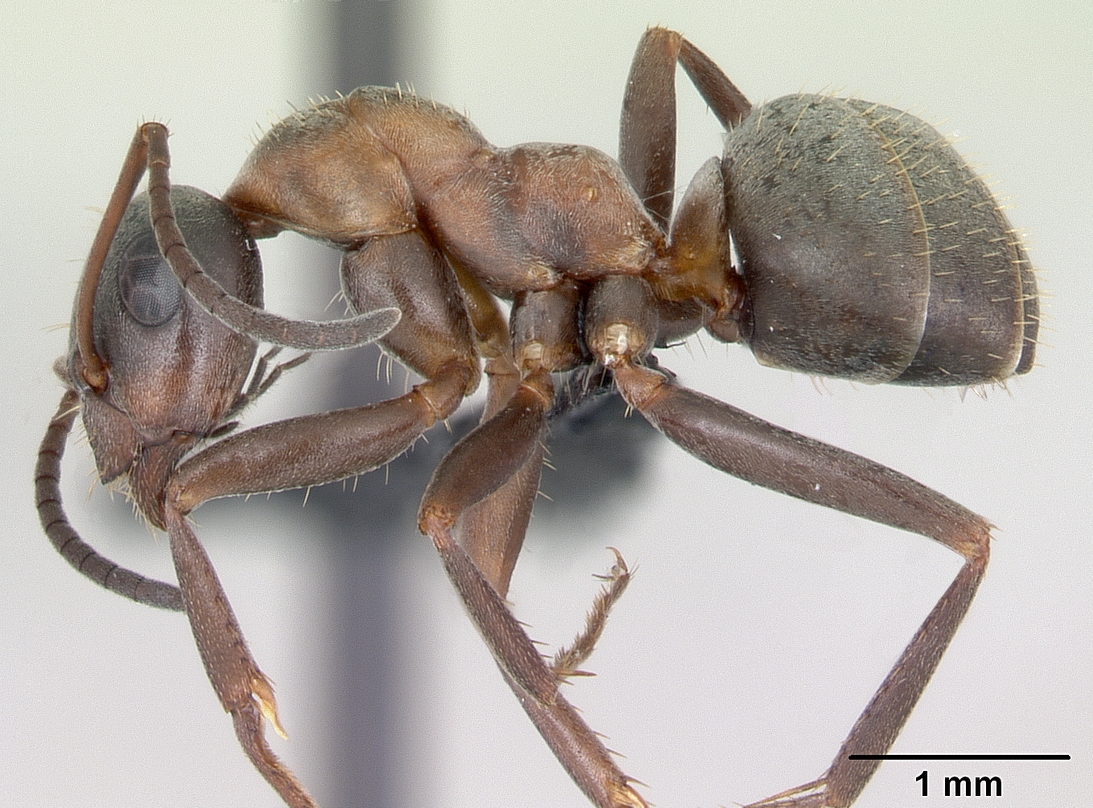
Strongylognathus testaceus
Photo: Wikimedia Commons (CC) via https://en.wikipedia.org/wiki/Strongylognathus_testaceus
Overview
Strongylognathus testaceus is a species of slave-making ant in the subfamily Myrmicinae. The species is known from Europe and the Caucasus.
Strongylognathus testaceus faces severe population declines due to habitat destruction and fragmentation of its specialized nesting sites. As a slave-making ant species with highly specific ecological requirements, it is particularly vulnerable to environmental changes that disrupt both its own colonies and those of its host species. The species' limited dispersal ability and dependence on specific host ant populations make recovery extremely difficult once local extinctions occur.
Habitat
This species inhabits dry grasslands, heathlands, and sandy soils in open woodland areas, typically in warm, well-drained locations. It requires specific microhabitat conditions that support both its own colonies and those of its host ant species, particularly Tetramorium species.
Other threatened species in Formicidae

Threatened in Andorra


Frequently asked questions
Why is Strongylognathus testaceus classified as Critically Endangered?
Where does Strongylognathus testaceus live?
What are the main threats to Strongylognathus testaceus?
Get weekly conservation intelligence
One short digest a week of the most striking species and country data we ship, plus breaking conservation news paired with our database where it matters.
Free, no spam. One-click unsubscribe in every email.