
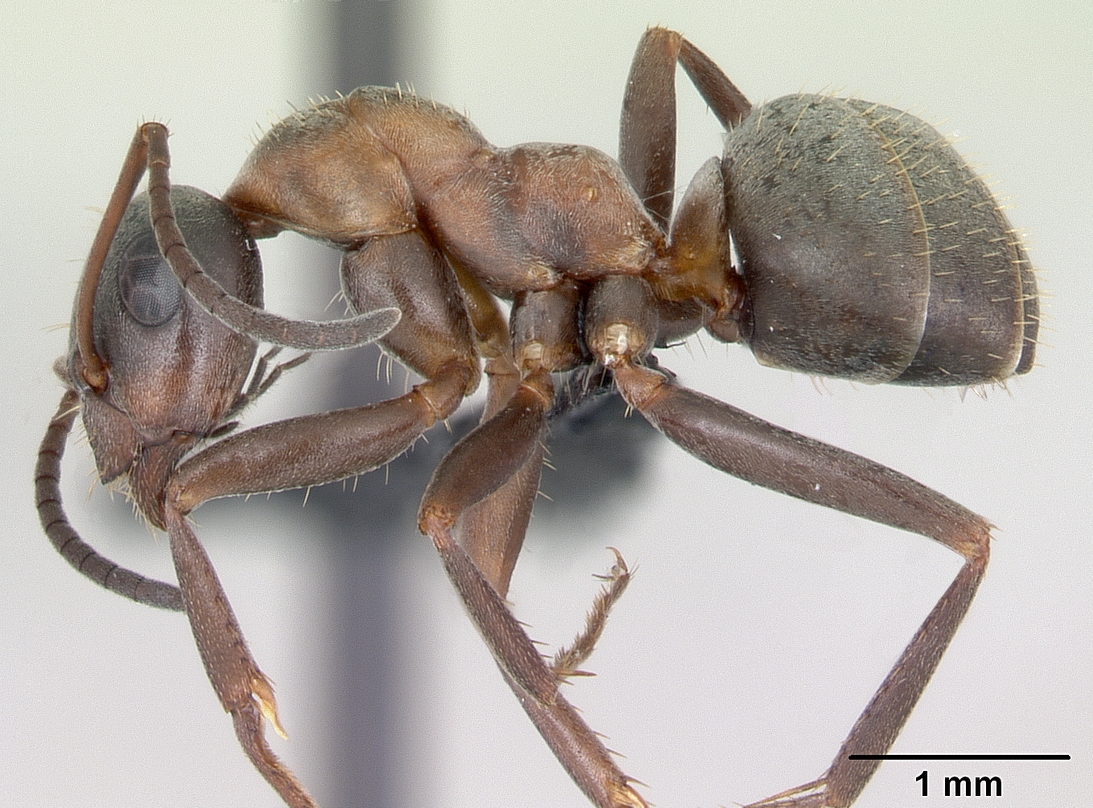
Formica pressilabris
Photo: Wikimedia Commons (CC) via https://en.wikipedia.org/wiki/Formica_pressilabris
Overview
A detailed profile for this species is sourced from the IUCN Red List of Threatened Species as assessments become available.
Formica pressilabris faces significant pressure from habitat degradation as heathland ecosystems across northern Europe are converted to agriculture or forestry plantations. The species' specialized requirements for open, sandy heathland with sparse vegetation make it particularly vulnerable to succession and scrubland encroachment when traditional grazing management ceases. Climate change poses an additional threat as warming temperatures may alter the delicate microhabitat conditions this cold-adapted ant requires.
Habitat
This specialized ant inhabits open, sandy heathlands with sparse vegetation, particularly areas maintained by traditional grazing practices. The species requires well-drained, nutrient-poor soils typical of northern European heath ecosystems, where it constructs its nests in exposed sandy patches between low shrubs.
Other threatened species in Formicidae

Threatened in Andorra


Frequently asked questions
Why is Formica pressilabris classified as Vulnerable?
Where does Formica pressilabris live?
What are the main threats to Formica pressilabris?
Get weekly conservation intelligence
One short digest a week of the most striking species and country data we ship, plus breaking conservation news paired with our database where it matters.
Free, no spam. One-click unsubscribe in every email.