
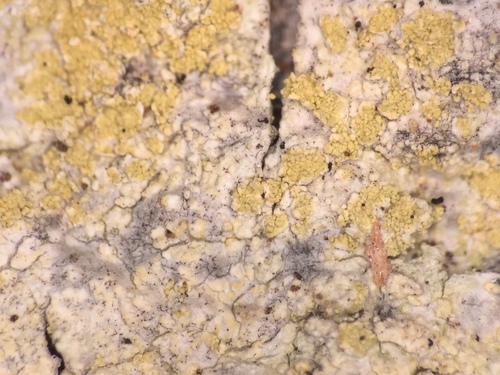
Rusty Firedot Lichen
Blastenia ferruginea
Photo: Wikimedia Commons (CC) via https://en.wikipedia.org/wiki/Blastenia_ferruginea
Overview
A detailed profile for this species is sourced from the IUCN Red List of Threatened Species as assessments become available.
Rusty Firedot Lichen faces severe threats from air pollution, particularly nitrogen deposition and sulfur compounds, which dramatically alter the chemical composition of its substrate and surrounding environment. Habitat loss through urbanization and industrial development has eliminated many suitable rock surfaces and old-growth forest sites where this species historically occurred. Climate change is creating increasingly unsuitable conditions through altered precipitation patterns and temperature extremes that disrupt the delicate moisture balance required for lichen survival.
Habitat
Inhabits exposed siliceous rocks, stone walls, and occasionally bark of old trees in coastal and montane environments. Typically found on acidic substrates in areas with clean air and specific moisture conditions, often in association with other crustose lichen communities.
Other threatened species in Teloschistaceae

Frequently asked questions
Why is Rusty Firedot Lichen classified as Critically Endangered?
Where does Rusty Firedot Lichen live?
What are the main threats to Rusty Firedot Lichen?
Get weekly conservation intelligence
One short digest a week of the most striking species and country data we ship, plus breaking conservation news paired with our database where it matters.
Free, no spam. One-click unsubscribe in every email.