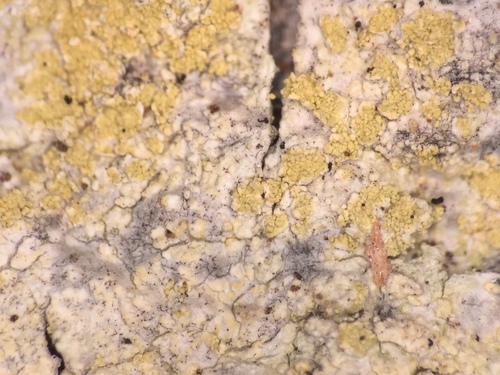
Solitaria chrysophthalma
Photo: Photo: (c) Tomás Curtis, some rights reserved (CC BY-NC), uploaded by Tomás Curtis
Overview
Solitaria is a fungal genus in the family Teloschistaceae. It contains a single species, the corticolous (bark-dwelling), crustose lichen Solitaria chrysophthalma.
Solitaria chrysophthalma faces severe population declines due to extensive habitat destruction from deforestation and agricultural expansion across its limited range. The species' specialized habitat requirements and small, fragmented populations make it extremely vulnerable to environmental changes and human disturbance.
Habitat
Inhabits dense primary and secondary forests with thick understory vegetation, typically in mountainous regions between 800-2000m elevation. Requires areas with abundant leaf litter and fallen logs for foraging, often near forest streams and in humid ravines.
Other threatened species in Teloschistaceae

Frequently asked questions
Why is Solitaria chrysophthalma classified as Critically Endangered?
Where does Solitaria chrysophthalma live?
What are the main threats to Solitaria chrysophthalma?
Get weekly conservation intelligence
One short digest a week of the most striking species and country data we ship, plus breaking conservation news paired with our database where it matters.
Free, no spam. One-click unsubscribe in every email.