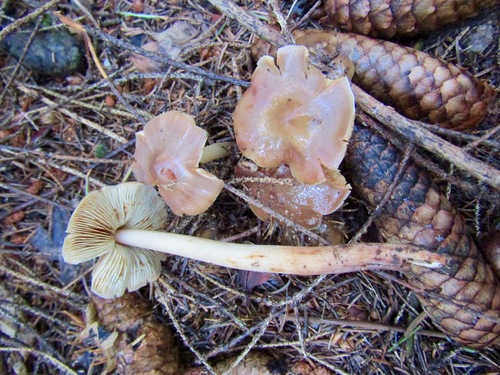
Russet Rootshank
Phaeocollybia lugubris
Photo: (c) Christian Apschner, some rights reserved (CC BY-NC), uploaded by Christian Apschner
Overview
A detailed profile for this species is sourced from the IUCN Red List of Threatened Species as assessments become available.
The Russet Rootshank faces severe threats from habitat loss due to deforestation and fragmentation of old-growth coniferous forests where it depends on specific mycorrhizal relationships. Climate change is altering the delicate moisture and temperature conditions required for fruiting body development, while pollution and soil acidification from industrial activities further degrade its specialized habitat requirements.
Habitat
Inhabits old-growth and mature coniferous forests, particularly those dominated by Douglas fir, western hemlock, and other Pacific Northwest conifers, typically in moist, well-drained soils with thick organic layers. Forms essential mycorrhizal associations with tree roots in undisturbed forest ecosystems at elevations ranging from sea level to montane zones.
Other threatened species in Hymenogastraceae

Frequently asked questions
Why is Russet Rootshank classified as Critically Endangered?
Where does Russet Rootshank live?
What are the main threats to Russet Rootshank?
Get weekly conservation intelligence
One short digest a week of the most striking species and country data we ship, plus breaking conservation news paired with our database where it matters.
Free, no spam. One-click unsubscribe in every email.