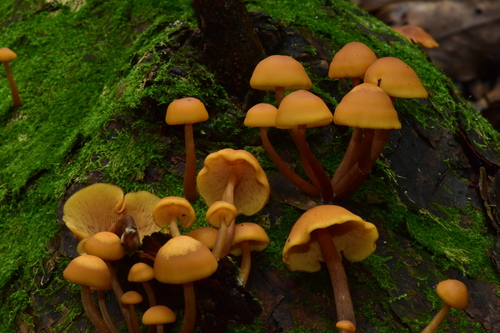
Bitter Rustgill
Gymnopilus picreus
Photo: iNaturalist: (c) Alan Rockefeller, some rights reserved (CC BY), uploaded by Alan Rockefeller
Overview
Dunkelstieliger Flämmling (Gymnopilus picreus) is a distinctive mushroom species characterized by its rusty-orange to yellow-brown cap and notably dark stem that gives it its German common name. This saprobic fungus plays a crucial ecological role in forest ecosystems by decomposing dead hardwood, particularly beech and oak, helping to recycle nutrients back into the soil.
Dunkelstieliger Flämmling faces significant threats from habitat degradation and loss of suitable forest ecosystems across its range. Climate change and altered precipitation patterns are affecting the delicate moisture conditions required for this fungal species to fruit and reproduce successfully.
Habitat
This saprophytic fungus inhabits temperate and boreal coniferous forests, particularly growing on decaying wood of spruce, fir, and pine trees. It requires specific moisture conditions and is typically found in mature forest ecosystems with abundant deadwood substrate.
Other threatened species in Hymenogastraceae

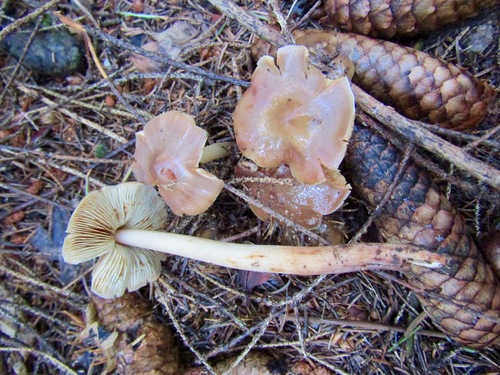
Frequently asked questions
Why is Bitter Rustgill classified as Vulnerable?
Where does Bitter Rustgill live?
What are the main threats to Bitter Rustgill?
Get weekly conservation intelligence
One short digest a week of the most striking species and country data we ship, plus breaking conservation news paired with our database where it matters.
Free, no spam. One-click unsubscribe in every email.