
Glowing Rustgill
Gymnopilus fulgens
Photo: Wikimedia Commons (CC) via https://en.wikipedia.org/wiki/Gymnopilus_fulgens
Overview
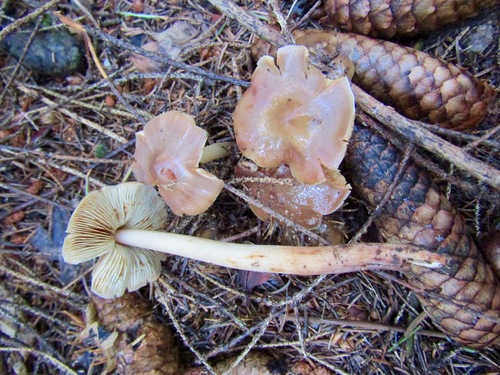
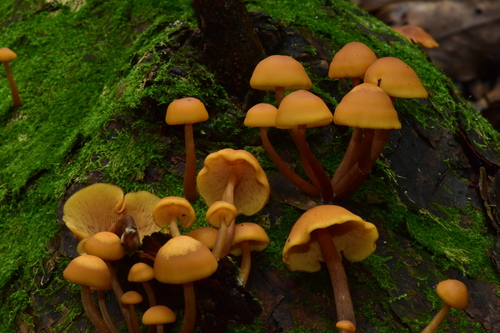
Gymnopilus fulgens is a species of mushroom in the family Hymenogastraceae. It was given its current name by mycologist Rolf Singer in 1951.
Glänzender Moor-Flämmling (Gymnopilus fulgens) is declining primarily due to habitat loss and degradation of its specialized bog and wetland ecosystems. Drainage of peatlands for agriculture and development, along with climate change affecting moisture regimes, are the primary drivers of population decline for this endangered fungal species.
Habitat
Gymnopilus fulgens grows among moss, on peaty soil, charred sphagnum, or burned-over soil. In the United States, it has been collected in Michigan, but it has also been found in Europe. It fruits from June to September.
Other threatened species in Hymenogastraceae
Frequently asked questions
Why is Glowing Rustgill classified as Endangered?
Where does Glowing Rustgill live?
What are the main threats to Glowing Rustgill?
Get weekly conservation intelligence
One short digest a week of the most striking species and country data we ship, plus breaking conservation news paired with our database where it matters.
Free, no spam. One-click unsubscribe in every email.