Phaeocollybia arduennensis
Overview
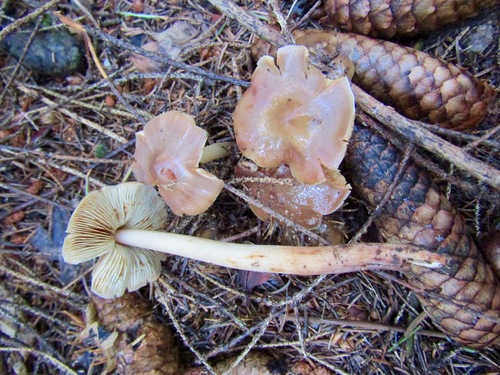
Kleiner Wurzelschnitzling (Phaeocollybia arduennensis) is a small, distinctive mushroom species characterized by its slender stature and deeply rooting pseudorhiza that extends far into the soil. This saprotrophic fungus plays a crucial role in forest ecosystems by decomposing organic matter and facilitating nutrient cycling in woodland soils.
Phaeocollybia arduennensis faces severe decline due to habitat loss from deforestation and forest fragmentation in its limited range. The species is particularly vulnerable to changes in forest composition and soil chemistry that affect its mycorrhizal relationships with host trees.
Habitat
Phaeocollybia arduennensis inhabits mature coniferous and mixed forests, particularly in the Ardennes region, where it grows in deep, undisturbed humus-rich soils. The species requires stable forest floor conditions with thick layers of decomposing leaf litter and minimal soil disturbance.
Other threatened species in Hymenogastraceae

Frequently asked questions
Why is Phaeocollybia arduennensis classified as Endangered?
Where does Phaeocollybia arduennensis live?
What are the main threats to Phaeocollybia arduennensis?
Get weekly conservation intelligence
One short digest a week of the most striking species and country data we ship, plus breaking conservation news paired with our database where it matters.
Free, no spam. One-click unsubscribe in every email.