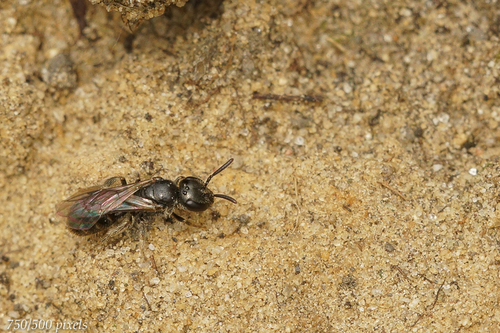
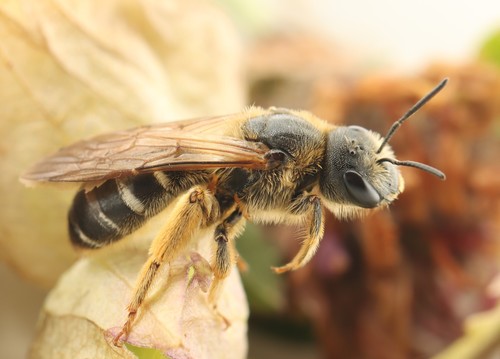
Lasioglossum quadrinotatulum
Photo: Photo: (c) Henk Wallays, all rights reserved, uploaded by Henk Wallays
Overview
Lasioglossum quadrinotatulum, commonly known as reliktsmalbi, is a critically endangered sweat bee species belonging to the family Halictidae. This small, solitary bee is endemic to specific regions where it plays a crucial role in local pollination networks. The species exhibits typical characteristics of the Lasioglossum genus, including metallic coloration and ground-nesting behavior.
Reliktsmalbi constructs its nests in suitable soil substrates, where females provision individual cells with pollen and nectar for their developing larvae. The species has experienced severe population declines that have led to its classification as Critically Endangered by the IUCN, though current population trends remain unknown due to limited monitoring data. Primary threats to reliktsmalbi include habitat loss and fragmentation from agricultural expansion and urban development, which destroy the specific soil conditions and floral resources the species requires.
Climate change poses additional risks by altering the timing of flowering plants that the bee depends on for foraging. Pesticide use in surrounding agricultural areas may also impact individual survival and reproductive success. Conservation efforts for this species remain limited, highlighting the need for targeted habitat protection and restoration programs.
Research initiatives focused on understanding the species' specific ecological requirements and population status are essential for developing effective conservation strategies. The preservation of reliktsmalbi requires immediate action to protect remaining habitat patches and establish corridors between fragmented populations.
Reliktsmalbi faces severe threats from habitat destruction caused by agricultural expansion and urban development, which eliminates the specific soil and floral resources essential for its survival. Climate change disrupts the synchronization between the bee's life cycle and the flowering periods of its food plants. Pesticide contamination from nearby farming activities poses additional risks to individual bee health and reproductive success.
Habitat
Reliktsmalbi inhabits areas with suitable soil conditions for ground nesting, typically in proximity to diverse flowering plant communities that provide essential pollen and nectar resources. The species requires specific microhabitat conditions including appropriate soil texture and drainage, along with access to native plant species that bloom during its active foraging periods.
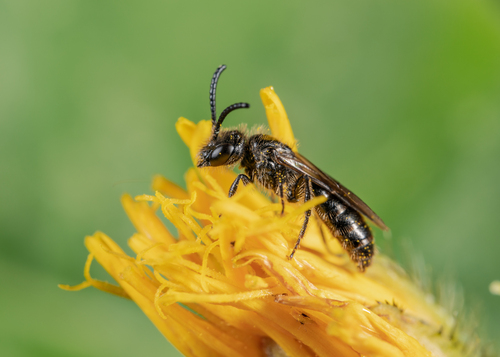
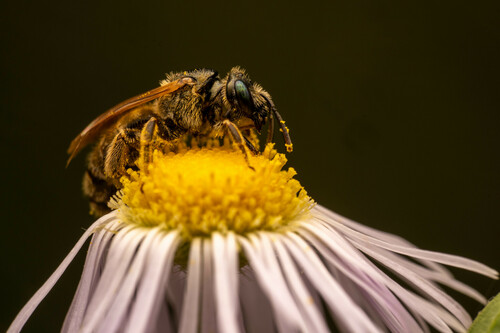
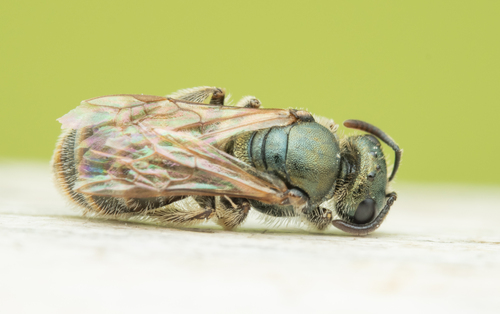
Other threatened species in Halictidae
Threatened in Austria
Frequently asked questions
Why is Lasioglossum quadrinotatulum classified as Critically Endangered?
Where does Lasioglossum quadrinotatulum live?
What are the main threats to Lasioglossum quadrinotatulum?
Get weekly conservation intelligence
One short digest a week of the most striking species and country data we ship, plus breaking conservation news paired with our database where it matters.
Free, no spam. One-click unsubscribe in every email.