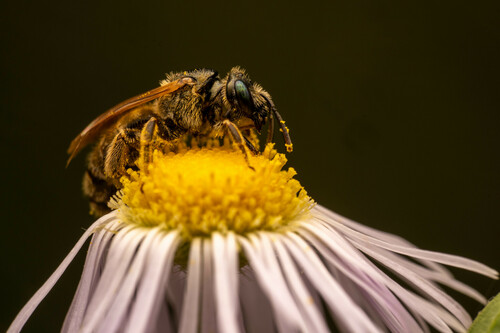
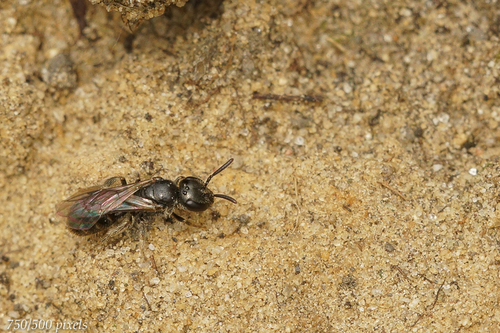
Halictus leucaheneus
Photo: (c) skightv, all rights reserved
Overview
The stäppbandbi (Halictus leucaheneus) is a critically endangered sweat bee species endemic to Sweden's steppe-like grassland environments. This small, ground-nesting bee belongs to the Halictidae family and plays an important role as a pollinator in its specialized habitat. The species exhibits typical halictid characteristics, with females constructing underground nests in sandy or well-drained soils where they provision cells with pollen and nectar for their developing larvae.
Halictus leucaheneus has experienced severe population declines and range contractions, leading to its classification as Critically Endangered by the IUCN. The primary threats to this species include habitat loss and fragmentation due to agricultural intensification, urban development, and changes in land management practices that have eliminated or degraded the open grassland habitats it requires. Climate change may also pose additional pressures through altered precipitation patterns and temperature regimes that affect both the bee and its food plants.
The species' specialized habitat requirements and limited distribution make it particularly vulnerable to environmental changes. Conservation efforts focus on habitat protection and restoration of suitable grassland areas, along with promoting traditional extensive grazing practices that maintain the open landscape structure necessary for the species' survival. Research into the species' specific ecological requirements and population status remains limited, highlighting the need for targeted monitoring and study programs.
The stäppbandbi faces severe threats from habitat loss and fragmentation caused by agricultural intensification and urban development that eliminate the open grassland environments it requires. Changes in land management practices, including the abandonment of traditional extensive grazing, have further degraded suitable nesting and foraging habitats. Climate change may compound these pressures by altering the environmental conditions and plant communities the species depends upon.
Habitat
Halictus leucaheneus inhabits open, steppe-like grassland environments with sandy or well-drained soils suitable for ground-nesting. The species requires areas with sparse vegetation cover and access to diverse flowering plants for foraging, typically found in extensively managed grasslands and similar semi-natural habitats.
Other threatened species in Halictidae
Threatened in Austria
Frequently asked questions
Why is Halictus leucaheneus classified as Critically Endangered?
Where does Halictus leucaheneus live?
What are the main threats to Halictus leucaheneus?
Get weekly conservation intelligence
One short digest a week of the most striking species and country data we ship, plus breaking conservation news paired with our database where it matters.
Free, no spam. One-click unsubscribe in every email.