Pigeye Shark
Carcharhinus amboinensis
Overview
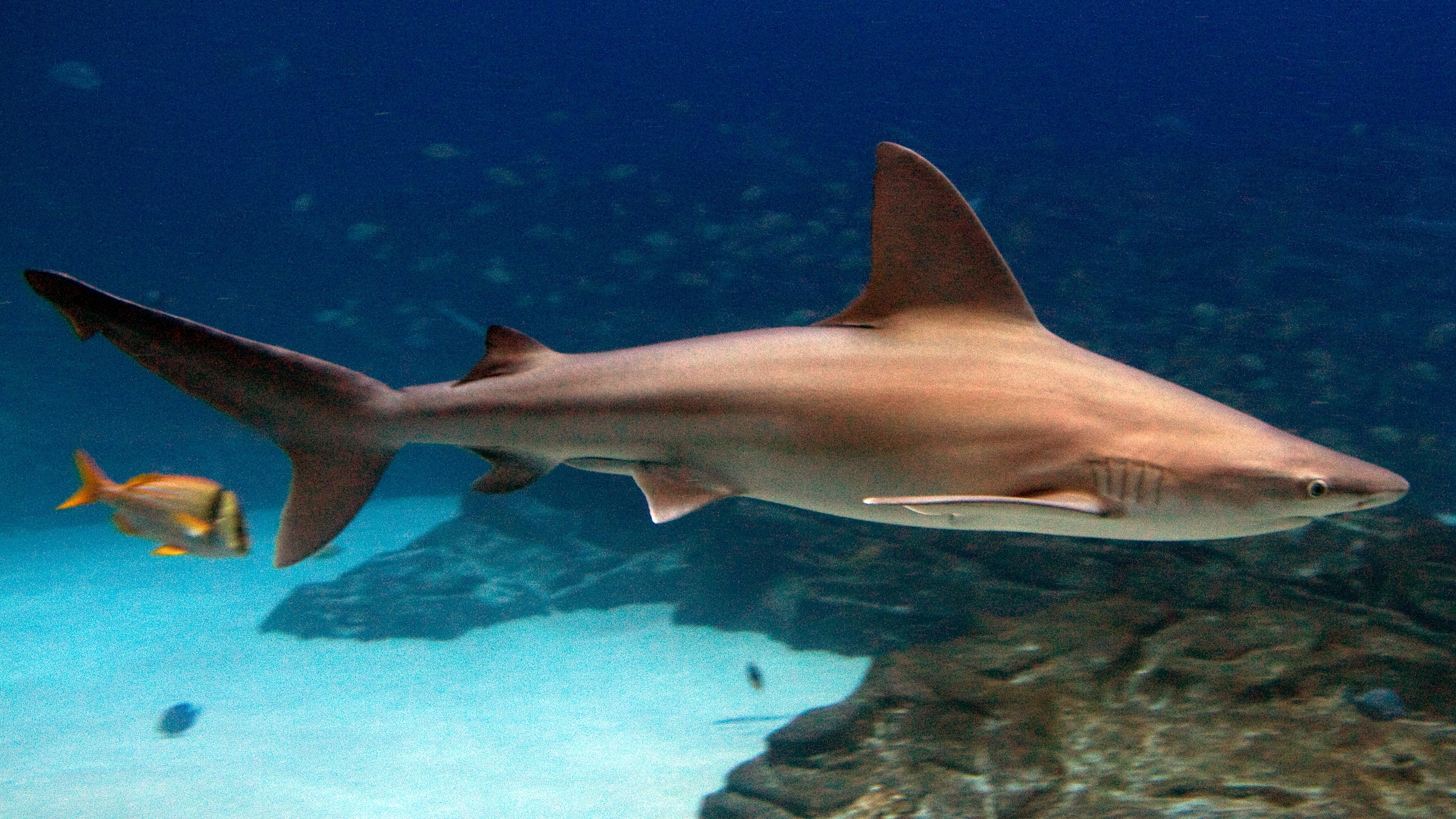
A robust, heavy-bodied requiem shark, the pigeye shark (Carcharhinus amboinensis) reaches lengths of around 2.5 to 2.8 meters and is easily confused with the more familiar bull shark due to its similarly stout build and blunt, rounded snout. It has small eyes, a tall first dorsal fin, and coloration ranging from bronze to grey above with a pale underside. As an apex and mesopredator, it feeds on bony fishes, smaller sharks and rays, and cephalopods, helping regulate prey populations in coastal marine food webs.
The species is found in warm coastal and estuarine waters across the Indo-West Pacific and parts of the Atlantic, with confirmed populations in Thailand, Taiwan, China, Malaysia, Australia, India, Indonesia, Pakistan, Madagascar, Mozambique, South Africa, Nigeria, Cameroon, and several other nations spanning Africa, Asia, and Oceania. It typically inhabits shallow inshore waters, including bays, river mouths, and turbid nearshore zones, rarely venturing far offshore.
Population declines are driven primarily by fishing and harvesting pressure, both targeted and incidental in inshore gillnet and longline fisheries, compounded by coastal habitat degradation from urban development, aquaculture expansion, agricultural runoff, and logging activity in coastal watersheds. These factors particularly affect nursery habitats in estuaries and shallow bays that juveniles depend on.
Conservation measures remain limited and inconsistent across its range, with some protection afforded through regional fisheries management, shark-specific catch regulations in countries like Australia and South Africa, and its listing under international trade and migratory species frameworks. Enforcement and monitoring remain weak in many range states.
Given ongoing habitat loss and largely unregulated fishing across much of its range, the species' population is assessed as decreasing, with no strong indication of near-term recovery.
Pigeye Sharks are mainly threatened by being accidentally or deliberately caught in fishing nets and lines, along with the loss of their coastal habitats due to expanding towns and cities, fish and shellfish farming operations, and farmland for crops. Additionally, logging activities near coastlines can degrade the waters where these sharks live and breed. These threats are ongoing and show no signs of slowing down, suggesting the pressures on this species remain persistent.
Habitat
Conservation measures underway
Other threatened species in CARCHARHINIDAE

Threatened in Australia
Frequently asked questions
Why is Pigeye Shark classified as Vulnerable?
Where does Pigeye Shark live?
What are the main threats to Pigeye Shark?
Get weekly conservation intelligence
One short digest a week of the most striking species and country data we ship, plus breaking conservation news paired with our database where it matters.
Free, no spam. One-click unsubscribe in every email.