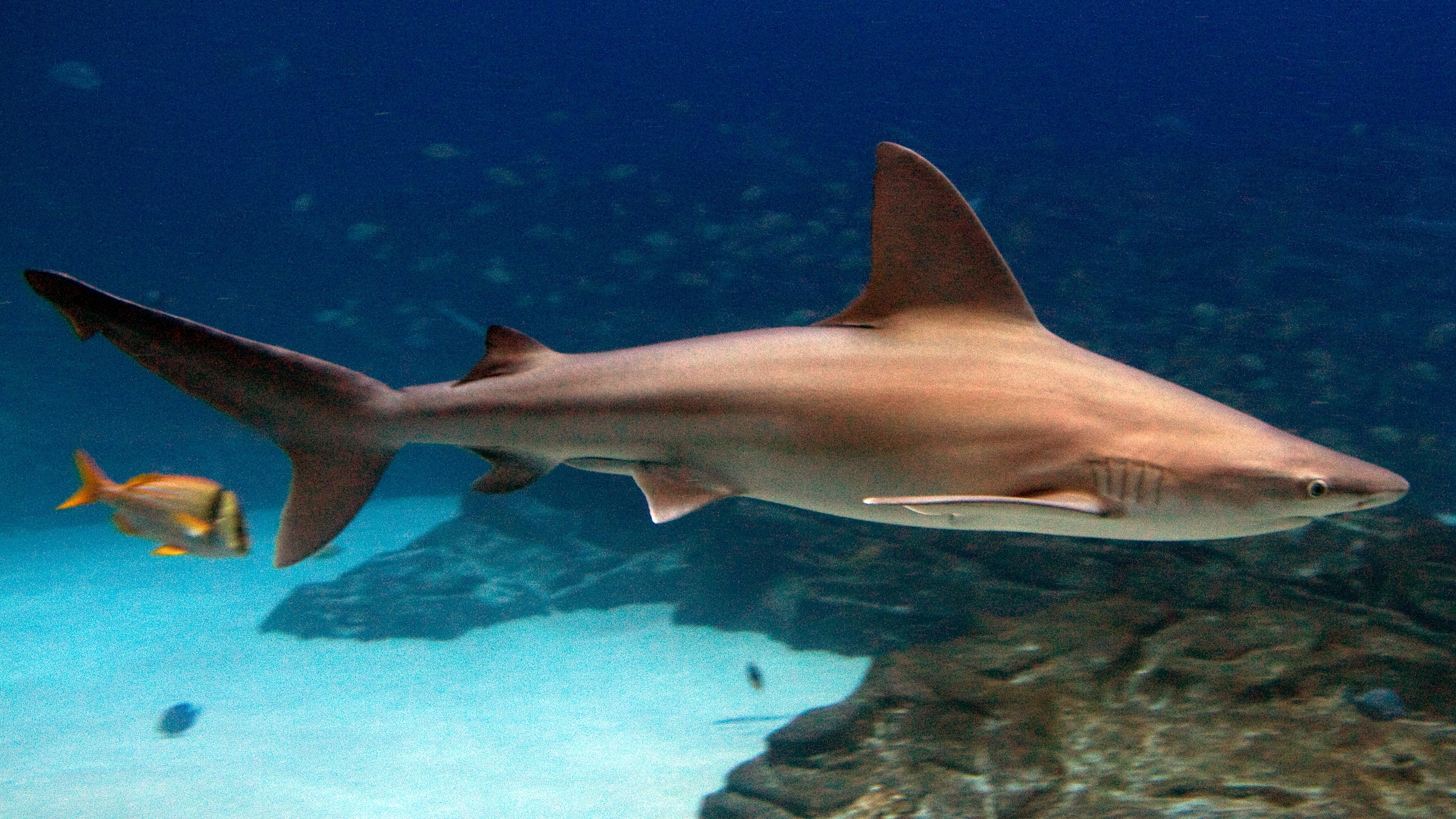
Sandbar Shark
Carcharhinus plumbeus
Photo: Wikimedia Commons (CC) via https://en.wikipedia.org/wiki/Sandbar_shark
Overview
Carcharhinus plumbeus is a medium-to-large requiem shark, typically reaching 1.5 to 2 meters in length, recognizable by its notably tall, triangular first dorsal fin and stocky, grey-brown body. As a slow-growing, late-maturing predator, it feeds on bony fishes, small elasmobranchs, and invertebrates, occupying a mid-to-upper trophic position that helps regulate prey populations on continental shelves and coastal ecosystems. It is generally solitary or found in loose aggregations, with pupping and nursery areas concentrated in shallow coastal waters before individuals move to deeper offshore habitat as adults.
The species has a broad, nearly circumglobal distribution across temperate and tropical seas, occupying rocky reefs, continental shelf waters, and open oceanic environments. It is recorded in coastal and offshore waters of dozens of countries and territories spanning the Atlantic, Indian, and Pacific Oceans, including the United States, Australia, Brazil, Japan, South Africa, and numerous island nations.
Population decline is driven primarily by targeted and incidental capture in commercial and artisanal fisheries, where it is caught for meat, fins, and liver oil; its late maturity and low reproductive rate make populations slow to recover from fishing pressure. Habitat degradation from coastal pollution and runoff associated with land-use changes, including logging, further reduces nursery habitat quality.
Conservation measures include regional fishing quotas and retention limits in some jurisdictions, protections under certain regional fisheries management frameworks, and listing on international trade monitoring agreements. Some nursery habitats fall within marine protected areas.
Despite these measures, enforcement remains inconsistent across its range, and the species continues to face sustained fishing mortality. Current assessments indicate a continuing population decline, with long-term recovery dependent on stronger, more consistently enforced management across multiple national jurisdictions.
Sandbar Sharks are mainly threatened by being caught in fishing nets and lines, both on purpose and as accidental bycatch, which remains a major ongoing pressure on their populations. Pollution of unclear origin also affects the species, and coastal logging and wood harvesting activities may be degrading the nursery habitats young sharks depend on. These threats are ongoing and show no clear signs of decreasing.
Habitat
Conservation measures underway
Other threatened species in CARCHARHINIDAE


Threatened in Albania

Frequently asked questions
Why is Sandbar Shark classified as Endangered?
Where does Sandbar Shark live?
What are the main threats to Sandbar Shark?
Get weekly conservation intelligence
One short digest a week of the most striking species and country data we ship, plus breaking conservation news paired with our database where it matters.
Free, no spam. One-click unsubscribe in every email.