
Bull Shark
Carcharhinus leucas
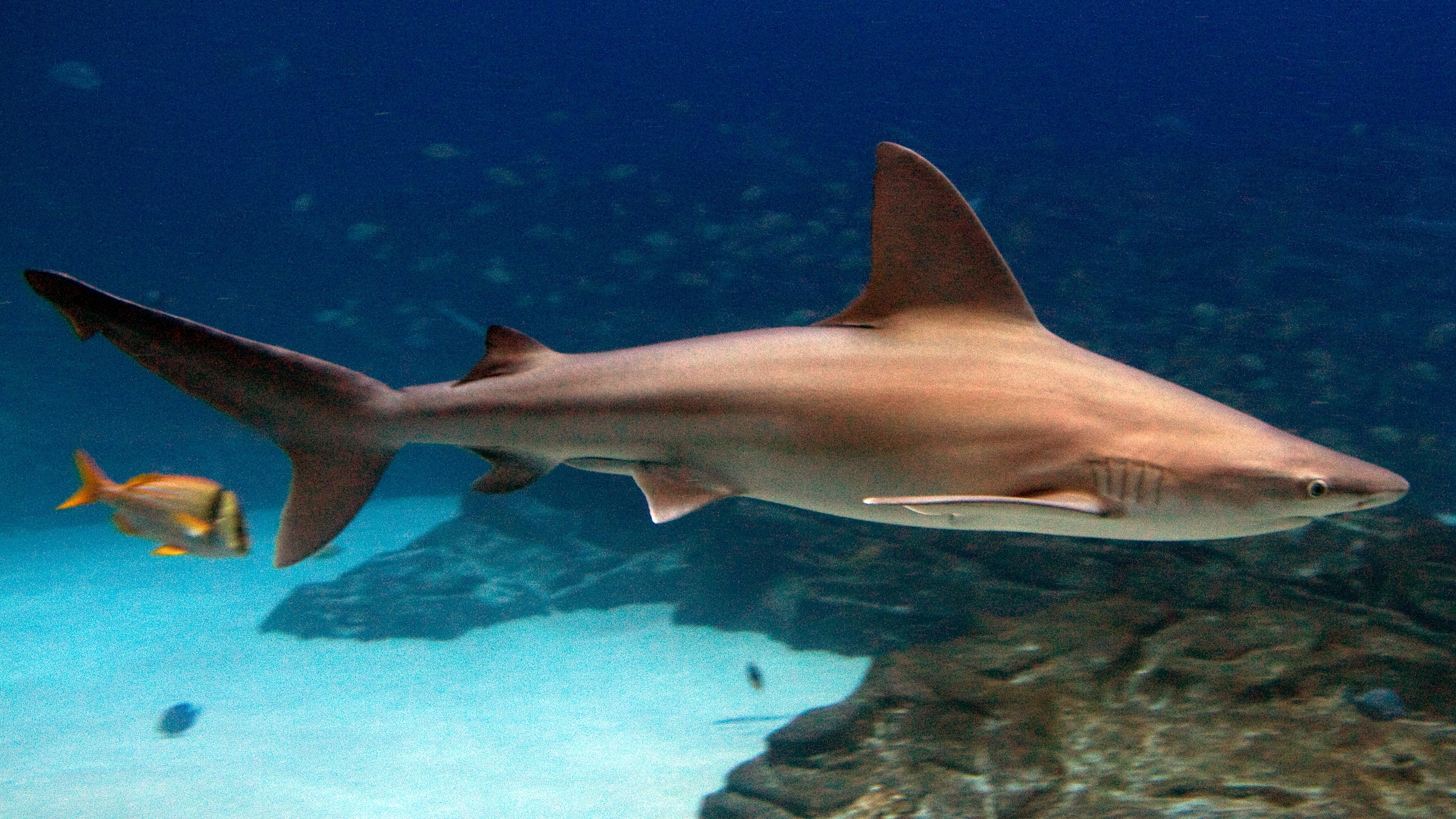
Photo: Wikimedia Commons (CC) via https://en.wikipedia.org/wiki/Bull_shark
Overview
Carcharhinus leucas is a large, robust requiem shark recognized by its stocky build, broad snout, and small eyes relative to body size. It is a top or mesopredator depending on habitat, feeding on fish, other elasmobranchs, marine mammals, and invertebrates, and it plays a significant role in regulating prey populations and maintaining trophic balance. Notably, it possesses a rare physiological tolerance for freshwater, achieved through osmoregulatory adaptations, allowing it to travel far upriver as well as inhabit coastal marine waters.
The species has a near-circumtropical distribution, occurring across marine coastal, marine oceanic, and freshwater habitats in over 70 countries and territories, including river systems, estuaries, lagoons, and open ocean waters from the Americas and Caribbean to Africa, the Middle East, South and Southeast Asia, and Oceania. This broad habitat use exposes it to a wide range of human pressures.
Population decline is driven by targeted and incidental capture in commercial and artisanal fisheries, harvested for meat, fins, and other products. Dam construction and water management alter and fragment critical freshwater and estuarine habitats used for nursing and migration. Coastal development, agricultural expansion, and logging degrade nursery habitats, while pollution from agricultural runoff and other unrecorded sources further compromises water quality in these environments.
Conservation measures include regional fishing regulations, shark sanctuaries in some national waters, and international trade monitoring under frameworks such as CITES for related shark species. Research programs continue to track migratory patterns and nursery habitat use to inform management.
Given ongoing habitat degradation, fishing pressure, and slow reproductive rates typical of large sharks, the population trend remains decreasing, and the species' long-term recovery depends on sustained, coordinated management across its wide range.
Bull sharks are mainly threatened by ongoing fishing pressure, along with the loss and alteration of the coastal and river habitats they depend on due to dam construction, water management changes, farming, and logging activities nearby. Pollution from unspecified sources also affects their environment. These threats are ongoing and show no signs of easing, suggesting a stable but persistent level of risk to the species.
Habitat
Conservation measures underway
Other threatened species in CARCHARHINIDAE

Threatened in Angola



Frequently asked questions
Why is Bull Shark classified as Vulnerable?
Where does Bull Shark live?
What are the main threats to Bull Shark?
Get weekly conservation intelligence
One short digest a week of the most striking species and country data we ship, plus breaking conservation news paired with our database where it matters.
Free, no spam. One-click unsubscribe in every email.