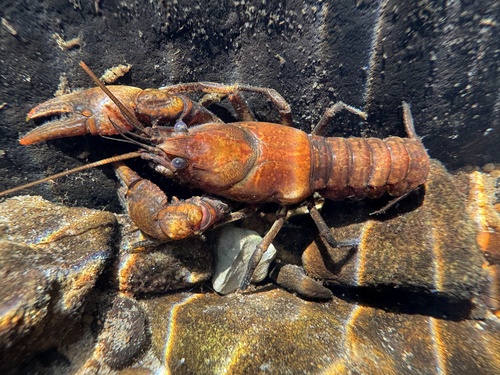
Obey Crayfish
Cambarus obeyensis
Photo: (c) Seth Shively, some rights reserved (CC BY-NC), uploaded by Seth Shively
Overview
Cambarus obeyensis, commonly known as the Obey River crayfish, is a freshwater crustacean endemic to the Obey River system in Tennessee, United States. This species belongs to the family Cambaridae and is characterized by its relatively small size and specialized habitat requirements within cool, clear streams. The Obey River crayfish occupies a highly restricted range, found only in select tributaries and headwater streams of the Obey River watershed in the Cumberland River basin.
This narrow distribution makes the species particularly vulnerable to environmental changes and human activities. The primary threats to Cambarus obeyensis include habitat degradation from agricultural runoff, sedimentation, and water quality deterioration. Urban development and land use changes within the watershed have contributed to increased pollution and altered stream flow patterns.
Climate change poses additional risks through potential shifts in water temperature and precipitation patterns that could affect the species' specialized habitat requirements. The construction of dams and other water management infrastructure has also fragmented suitable habitat areas. Conservation efforts for this critically endangered species focus on habitat protection and water quality improvement within the Obey River system.
Monitoring programs track population status and habitat conditions, while collaboration with landowners aims to implement best management practices that reduce agricultural and urban impacts on stream ecosystems. Research continues to better understand the species' ecological needs and develop targeted conservation strategies.
The Obey River crayfish faces severe threats from habitat degradation caused by agricultural runoff, sedimentation, and water quality deterioration within its limited range. Urban development and altered land use patterns have increased pollution and changed natural stream flow conditions. Climate change and water management infrastructure further threaten the species' specialized habitat requirements.
Habitat
Cambarus obeyensis inhabits cool, clear headwater streams and tributaries within the Obey River system in Tennessee. The species requires clean, well-oxygenated waters with suitable substrate for burrowing and shelter.
Conservation measures underway
Other threatened species in CAMBARIDAE
Threatened in United States
Frequently asked questions
Why is Obey Crayfish classified as Critically Endangered?
Where does Obey Crayfish live?
What are the main threats to Obey Crayfish?
Get weekly conservation intelligence
One short digest a week of the most striking species and country data we ship, plus breaking conservation news paired with our database where it matters.
Free, no spam. One-click unsubscribe in every email.