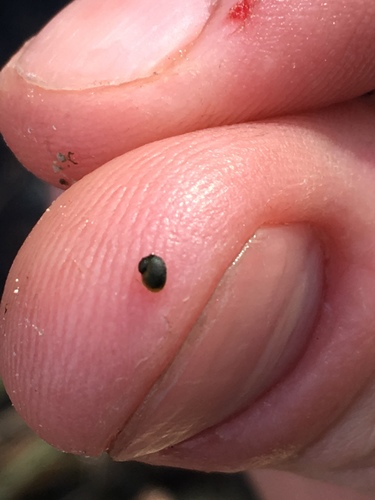
Ash Meadows Pebblesnail
Pyrgulopsis erythropoma
Photo: (c) Corey Lange, some rights reserved (CC BY-NC), uploaded by Corey Lange
Overview
Pyrgulopsis erythropoma is a minute freshwater snail endemic to the southwestern United States, representing one of the most specialized gastropods in North America's desert spring ecosystems. This tiny mollusk, measuring less than 4 millimeters in shell length, displays a distinctive elongated conical shell with subtle reddish coloration that gives the species its name. The snail inhabits isolated desert springs and their immediate outflows, where it grazes on algae and organic detritus in the shallow, mineral-rich waters.
These springs maintain relatively constant temperatures year-round, creating unique microhabitats that support highly endemic fauna. Pyrgulopsis erythropoma exhibits extremely limited dispersal capabilities, with populations confined to single spring systems or small clusters of connected springs. The species demonstrates remarkable physiological adaptations to its harsh desert environment, including tolerance for high mineral concentrations and temperature fluctuations that would prove lethal to most freshwater mollusks.
Behavioral observations indicate the snails are most active during cooler periods, often retreating to deeper crevices or under rocks during peak heat. The International Union for Conservation of Nature classifies this species as Critically Endangered, reflecting its extremely restricted range and ongoing habitat threats. Despite its precarious status, recent collaborative efforts between federal agencies, state wildlife departments, and local conservation groups have established monitoring protocols for several known populations.
Spring restoration projects in some areas have shown promising results, with improved water flow and habitat quality benefiting not only Pyrgulopsis erythropoma but entire spring-dependent communities. The species serves as an important indicator of desert spring ecosystem health, making its conservation valuable for broader habitat protection efforts.
Pyrgulopsis erythropoma faces severe threats from groundwater depletion and spring modification, as agricultural pumping and urban development lower water tables that feed its desert spring habitats. Invasive species, particularly non-native fish and aquatic plants, alter the delicate spring ecosystems by disrupting natural flow patterns and competing for limited resources. Climate change intensifies these pressures through increased evaporation rates and altered precipitation patterns, further reducing already minimal water sources. Recreational activities and livestock access at spring sites cause direct habitat degradation through trampling, sedimentation, and water quality deterioration.
Habitat
This species inhabits isolated desert springs and their immediate outflows in the southwestern United States, typically in areas with constant water temperatures and high mineral content. The snails occupy shallow areas with rocky or sandy substrates where they can access algal growth and organic matter while finding shelter in crevices and under stones.
Conservation measures underway
Other threatened species in HYDROBIIDAE
Threatened in United States
Frequently asked questions
Why is Ash Meadows Pebblesnail classified as Critically Endangered?
Where does Ash Meadows Pebblesnail live?
What are the main threats to Ash Meadows Pebblesnail?
Get weekly conservation intelligence
One short digest a week of the most striking species and country data we ship, plus breaking conservation news paired with our database where it matters.
Free, no spam. One-click unsubscribe in every email.