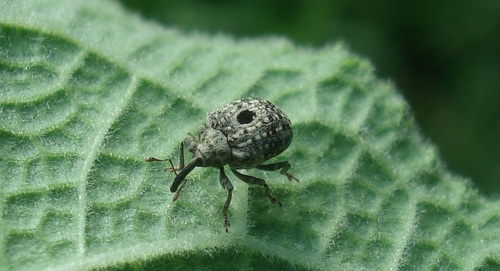
Cionus nigritarsis
Photo: Photo: (c) Lucyna Bugiera, some rights reserved (CC BY-NC), uploaded by Lucyna Bugiera
Overview
Cionus nigritarsis is a small weevil belonging to the genus Cionus, a group of beetles within the family Curculionidae known for their close ecological association with figwort and mullein plants (family Scrophulariaceae). Like other members of this genus, it is likely characterized by a compact, rounded body with a distinctive pattern of scales creating mottled markings across the elytra, along with the short, broad snout typical of Cionus weevils. This species is classified as Critically Endangered (CR) by the IUCN, reflecting a precarious conservation outlook shaped by a highly restricted range and specialized ecological requirements.
Cionus weevils are typically found in association with their host plants in open habitats such as grasslands, scrubland margins, and disturbed or semi-natural vegetation communities, where larvae develop on foliage and adults feed on leaves and flower buds. The primary drivers of decline for this species are believed to include habitat degradation affecting its host plant populations, agricultural intensification, and the inherent vulnerability that comes with a narrow geographic distribution, all of which limit the species' capacity to withstand environmental disturbance. Because insect taxa such as this receive comparatively little research investment relative to vertebrates, detailed population monitoring remains limited, though the CR designation signals that available range and habitat data point to severe and ongoing risk of extinction.
On a positive note, growing recognition of the ecological importance of specialist phytophagous insects has begun to encourage targeted habitat surveys and conservation attention for narrow-range invertebrates like Cionus nigritarsis, offering a pathway toward improved data collection and site-based protection measures in the regions where it persists.
Mindre kungsljusvivel faces severe threats from habitat loss due to agricultural intensification and urbanization, which destroys the specific plant communities it depends on for breeding and feeding. The species' highly specialized relationship with its host plants makes it particularly vulnerable to environmental changes and habitat fragmentation.
Habitat
Specializes in areas where its host plants in the Scrophulariaceae family grow, typically found in semi-natural grasslands, meadows, field margins, and disturbed ground with abundant mullein and related species. The species requires specific microhabitat conditions where host plants can establish and maintain viable populations.
Other threatened species in Curculionidae

Threatened in Austria
Frequently asked questions
Why is Cionus nigritarsis classified as Critically Endangered?
Where does Cionus nigritarsis live?
What are the main threats to Cionus nigritarsis?
Get weekly conservation intelligence
One short digest a week of the most striking species and country data we ship, plus breaking conservation news paired with our database where it matters.
Free, no spam. One-click unsubscribe in every email.