Sharptooth Lemon Shark
Negaprion acutidens
Overview
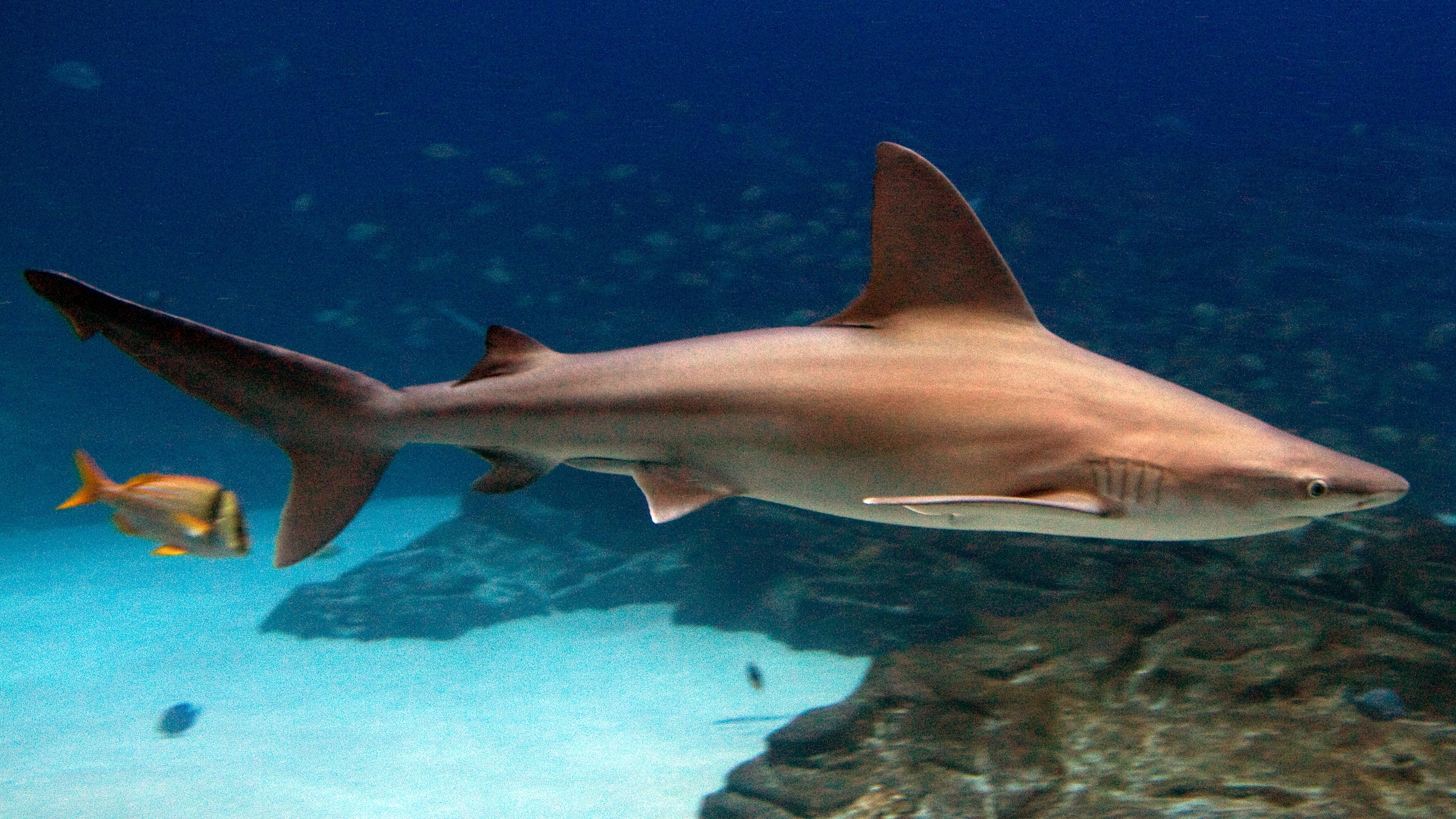
Negaprion acutidens is a large coastal shark reaching lengths of up to 3.8 meters, distinguished by its yellowish-brown to olive skin tone, broad head, and two similarly sized dorsal fins. As an apex and mesopredator, it feeds on bony fishes, rays, and cephalopods, helping regulate prey populations and maintain balance within reef and mangrove food webs. It is generally slow-moving but capable of rapid bursts when hunting, and individuals often show site fidelity, returning repeatedly to the same lagoons or reef systems.
This species occupies shallow tropical and subtropical waters across the Indo-Pacific, favoring coral reef flats, lagoons, and mangrove-lined coastlines that serve as nursery habitat for juveniles. Its range spans a wide number of countries and territories, from East Africa and the Red Sea through South and Southeast Asia to Australia and the Pacific Islands.
Population declines stem largely from coastal development, including housing and urban expansion, aquaculture operations, and agricultural land conversion that degrade or destroy mangrove nurseries. Logging in coastal watersheds contributes to habitat alteration and sedimentation. Targeted and incidental fishing, both artisanal and commercial, remains a major pressure, as the species is vulnerable to nets and longlines throughout its shallow-water range.
Conservation responses include regional shark fishing regulations, marine protected areas encompassing reef and mangrove habitat, and international trade monitoring under CITES Appendix II, which lists the broader lemon shark group. Some range states have established shark sanctuaries prohibiting commercial shark fishing entirely.
Despite these measures, population trends remain downward due to continued habitat loss and fishing pressure across much of its range. Without stronger enforcement and expanded nursery habitat protection, the species' conservation trajectory is likely to remain concerning in the near term.
This shark is mainly threatened by being caught in fishing nets and lines, both on purpose and by accident, as well as the loss of its coastal habitats like mangroves and shallow reefs due to coastal construction, fish and shrimp farming, and farmland expansion. Logging near coastlines also degrades the nursery areas young sharks depend on. Since all of these pressures are currently listed as ongoing, the overall threat level to this species appears to be stable to intensifying rather than decreasing.
Habitat
Conservation measures underway
Other threatened species in CARCHARHINIDAE

Threatened in Australia
Frequently asked questions
Why is Sharptooth Lemon Shark classified as Endangered?
Where does Sharptooth Lemon Shark live?
What are the main threats to Sharptooth Lemon Shark?
Get weekly conservation intelligence
One short digest a week of the most striking species and country data we ship, plus breaking conservation news paired with our database where it matters.
Free, no spam. One-click unsubscribe in every email.