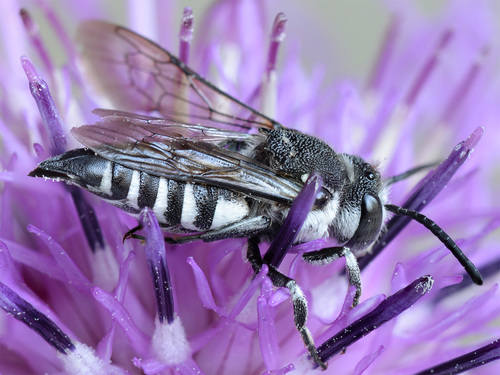
Large Sharp-tail Bee
Coelioxys conoideus
Photo: Photo: (c) Vladimir Bryukhov, some rights reserved (CC BY-NC), uploaded by Vladimir Bryukhov
Overview
The Large Sharp-tail Bee (Coelioxys conoideus) is a distinctive cuckoo bee species characterized by its robust build and sharply pointed abdominal tip, particularly pronounced in females. This parasitic bee does not collect pollen itself but instead infiltrates the nests of other solitary bee species, laying its eggs in their brood cells where the larvae consume the host's provisions.
The Large Sharp-tail Bee faces severe population declines primarily due to habitat loss from agricultural intensification and urban development, which has eliminated much of its specialized nesting sites and reduced availability of host bee species. Climate change and pesticide use further compound these pressures, making this cleptoparasitic bee extremely vulnerable to extinction.
Habitat
Coelioxys conoideus inhabits areas with abundant flowering plants near sandy or clay-rich soils where its host bees construct their underground nests. The species is typically found in coastal dunes, heathlands, and traditional agricultural landscapes with hedgerows and wildflower margins.
Other threatened species in Megachilidae
Threatened in Austria
Frequently asked questions
Why is Large Sharp-tail Bee classified as Critically Endangered?
Where does Large Sharp-tail Bee live?
What are the main threats to Large Sharp-tail Bee?
Get weekly conservation intelligence
One short digest a week of the most striking species and country data we ship, plus breaking conservation news paired with our database where it matters.
Free, no spam. One-click unsubscribe in every email.