
Large Brindled Clothes
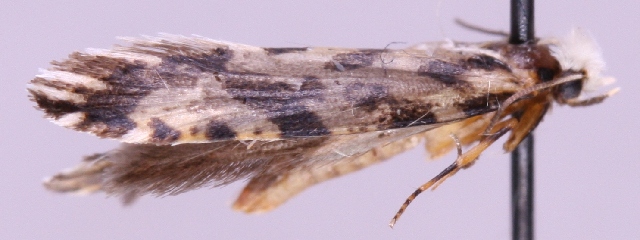
Triaxomera parasitella
Photo: Wikimedia Commons (CC) via https://en.wikipedia.org/wiki/Triaxomera_parasitella
Overview
Triaxomera parasitella is a species of tineoid moth. It belongs to the fungus moth family (Tineidae), and therein to the subfamily Nemapogoninae. It is widespread and common in much of western Eurasia, but seems to be absent from some more outlying regions, such as Portugal and the eastern Baltic, Ireland and Iceland.
It has also not been recorded from Slovenia but given that it is found in neighboring countries, it may well occur there unnoticed. Recently, the species was recorded from British Columbia. Generally, it is a moth of warm temperate regions, e.g.
in Great Britain it is only a rare and scarce species from the English Midlands northwards.
The Large Brindled Clothes moth faces severe population declines primarily due to habitat loss from urbanization and agricultural intensification, which has eliminated many of its specialized breeding sites. Climate change is altering the distribution and phenology of its host plants, while light pollution disrupts its nocturnal behavior and reproduction cycles.
Other threatened species in Tineidae


Threatened in Austria
Frequently asked questions
Why is Large Brindled Clothes classified as Endangered?
Where does Large Brindled Clothes live?
What are the main threats to Large Brindled Clothes?
Get weekly conservation intelligence
One short digest a week of the most striking species and country data we ship, plus breaking conservation news paired with our database where it matters.
Free, no spam. One-click unsubscribe in every email.