
Hart's-tongue Smut
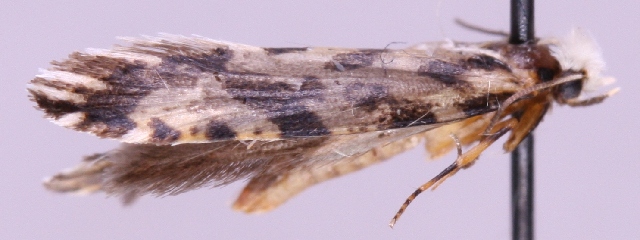
Psychoides verhuella
Photo: Wikimedia Commons (CC) via https://en.wikipedia.org/wiki/Psychoides_verhuella
Overview
A detailed profile for this species is sourced from the IUCN Red List of Threatened Species as assessments become available.
Hart's-tongue Smut faces severe pressure from the decline of its host plant, Hart's-tongue fern (Asplenium scolopendrium), due to habitat degradation and fragmentation of ancient woodland sites. The species' highly specialized lifecycle, requiring specific microhabitat conditions within damp, shaded environments, makes it particularly vulnerable to changes in forest management practices and climate-induced alterations to moisture regimes. Urban development and agricultural intensification have reduced the availability of suitable woodland fragments, while invasive plant species can alter the understory composition essential for both the moth and its host fern.
Habitat
Hart's-tongue Smut inhabits damp, shaded ancient woodlands and limestone gorges where its host plant, Hart's-tongue fern, grows in crevices and on moss-covered rocks. The species requires specific microhabitat conditions with high humidity and stable temperatures, typically found in undisturbed woodland areas with rich, calcareous soils.
Other threatened species in Tineidae

Threatened in Austria
Frequently asked questions
Why is Hart's-tongue Smut classified as Vulnerable?
Where does Hart's-tongue Smut live?
What are the main threats to Hart's-tongue Smut?
Get weekly conservation intelligence
One short digest a week of the most striking species and country data we ship, plus breaking conservation news paired with our database where it matters.
Free, no spam. One-click unsubscribe in every email.