
Kaluga
Huso dauricus
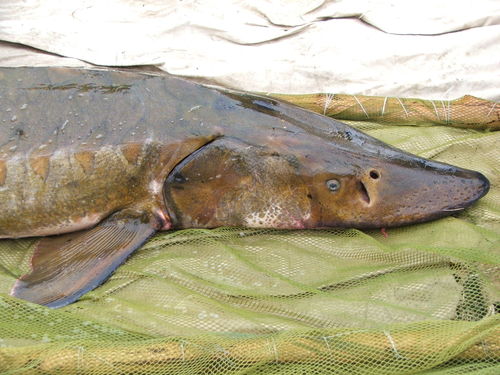
Photo: Wikimedia Commons (CC) via https://en.wikipedia.org/wiki/Kaluga_(fish)
Overview
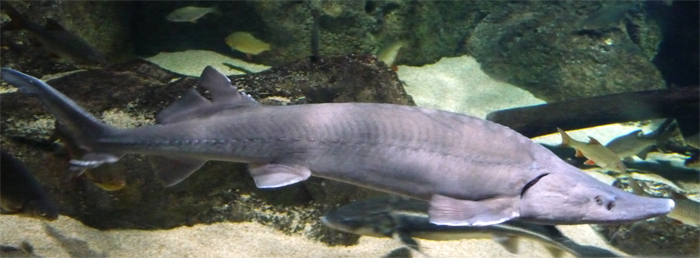
Huso dauricus, commonly known as the Kaluga or River Beluga, is the largest freshwater fish species in the world and a member of the sturgeon family. This ancient species is endemic to the Amur River basin, which spans across Russia, China, and Mongolia, with populations also found in the Sea of Okhotsk and Sea of Japan coastal areas. Kaluga can reach extraordinary sizes, with some individuals growing over 5 meters in length and living for several decades.
The species exhibits anadromous behavior, migrating between freshwater and marine environments for feeding and reproduction. Kaluga face severe population declines due to multiple anthropogenic pressures. Overfishing for their valuable roe (caviar) and meat has historically been a primary driver of population reduction.
Habitat degradation through dam construction, river channelization, and pollution has fragmented their migration routes and spawning grounds. Climate change and altered river flow patterns further compound these challenges. The species' slow maturation rate, with individuals not reaching sexual maturity until 16-20 years of age, makes population recovery particularly difficult.
Conservation efforts include fishing moratoriums, artificial breeding programs, and habitat restoration initiatives. Russia and China have implemented protective regulations and established captive breeding facilities to support population recovery. International cooperation through CITES listings helps regulate trade, while research programs focus on understanding migration patterns and reproductive biology to inform conservation strategies.
Kaluga populations have declined severely due to overfishing for caviar and meat, combined with habitat destruction from dam construction and river modifications that block migration routes. The species' extremely slow maturation rate makes recovery from these pressures particularly challenging.
Habitat
Kaluga inhabit the Amur River basin and adjacent coastal marine waters, requiring both freshwater spawning areas and marine feeding grounds. They depend on free-flowing rivers with gravel substrates for reproduction and access to estuarine and coastal waters for feeding.
Conservation measures underway
Other threatened species in ACIPENSERIDAE


Threatened in China
Frequently asked questions
Why is Kaluga classified as Critically Endangered?
Where does Kaluga live?
What are the main threats to Kaluga?
Get weekly conservation intelligence
One short digest a week of the most striking species and country data we ship, plus breaking conservation news paired with our database where it matters.
Free, no spam. One-click unsubscribe in every email.