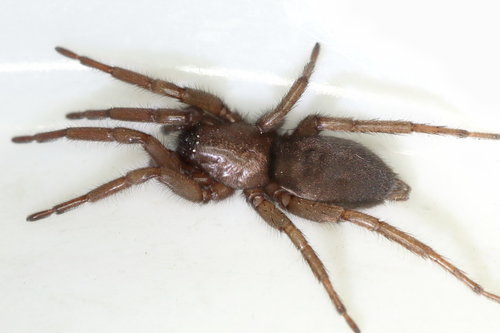
heidelanglijf
Sphaerophoria virgata
The heidelanglijf (Sphaerophoria virgata) is a distinctive hoverfly species characterized by its elongated yellow and black striped abdomen and relatively large size compared to other Sphaerophoria species. This important pollinator plays a crucial ecological role in maintaining plant diversity across its range, with adults feeding on nectar while larvae consume aphids, providing natural pest control services.
17
Countries
Taxonomy & Classification
Kingdom
Animalia
Phylum
Arthropoda
Class
Insecta
Order
Diptera
Family
Syrphidae
Genus
Sphaerophoria
heidelanglijf belongs to the family Syrphidae, order Diptera, within the Insecta class.
Species Profile
The heidelanglijf (Sphaerophoria virgata) is a distinctive hoverfly species characterized by its elongated yellow and black striped abdomen and relatively large size compared to other Sphaerophoria species. This important pollinator plays a crucial ecological role in maintaining plant diversity across its range, with adults feeding on nectar while larvae consume aphids, providing natural pest control services.
Sphaerophoria virgata, a hoverfly species, faces significant population declines primarily due to habitat loss from agricultural intensification and urbanization. The species is particularly vulnerable to pesticide use and the loss of wildflower meadows that provide essential nectar sources and breeding sites.
Key Facts
Habitat & Distribution
This species inhabits flower-rich meadows, woodland edges, and traditional hay fields with diverse wildflower communities, particularly favoring areas with abundant umbelliferous plants. It requires a mosaic of habitats including nearby aphid-hosting plants for larval development and overwintering sites in undisturbed grassland margins.
Threats
IUCN Red List: Endangered
Sphaerophoria virgata, a hoverfly species, faces significant population declines primarily due to habitat loss from agricultural intensification and urbanization. The species is particularly vulnerable to pesticide use and the loss of wildflower meadows that provide essential nectar sources and breeding sites.
Agricultural intensification and pesticide use
Loss of wildflower meadows and grasslands
Climate change affecting flowering plant phenology
Urbanization and habitat fragmentation
Found in 17 Countries
National vs Global Threat Status
How this species is assessed at the national level compared to its IUCN global status (EN).
| Country | National Status | Global Status | Comparison |
|---|---|---|---|
| EU | NTNear Threatened | ENEndangered | Lower local risk |
| EU | NTNear Threatened | ENEndangered | Lower local risk |
National Red List data sourced from the National Red List Project (nationalredlist.org, ZSL) and country-specific Red List authorities.
Community Sightings
Report a sightingNo community sightings yet. Be the first to report!
Sources & Attribution
How to Cite
IUCN: IUCN (2025). The IUCN Red List of Threatened Species. Version 2025-1. Available at: https://www.iucnredlist.org. doi:10.2305/IUCN.UK.2025-1.RLTS
GBIF: GBIF.org (2025). GBIF Home Page. Available at: https://www.gbif.org
National Red Lists: ZSL (2025). National Red List. Zoological Society of London. Available at: https://www.nationalredlist.org
This page: SpeciesRadar (2025). heidelanglijf (Sphaerophoria virgata). SpeciesRadar: Intelligence for Earth's Biodiversity. Available at: https://speciesradar.org/species/heidelanglijf