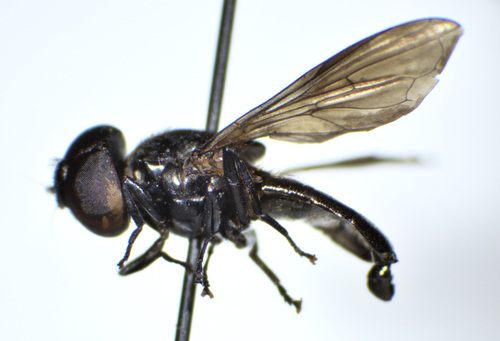
Cheilosia nigripes
Photo: Photo: (c) andreaszehm, some rights reserved (CC BY-NC), uploaded by andreaszehm
Overview
The zwartpootgitje (Cheilosia nigripes) is a critically endangered hoverfly species belonging to the family Syrphidae. This distinctive dipteran is characterized by its dark legs, which give the species its Dutch common name meaning 'black-footed hoverfly.' Like other members of the Cheilosia genus, C. nigripes exhibits the typical hoverfly behavior of hovering near flowers while feeding on nectar and pollen.
The species has a highly restricted distribution and is known from very few locations, contributing to its precarious conservation status. Adult flies are active during specific seasonal periods and require particular flowering plants for nectar sources. The larvae develop in specialized microhabitats, though detailed ecological requirements remain poorly understood due to the species' rarity.
Habitat loss and fragmentation represent primary threats to remaining populations, as the species appears to have very specific environmental requirements that make it vulnerable to landscape changes. Climate change may pose additional pressures through altered flowering phenology and habitat suitability. The species' extremely limited range and small population size make it particularly susceptible to local extinctions from environmental disturbances.
Conservation efforts are hampered by limited knowledge of the species' precise habitat requirements and life cycle details. Targeted habitat management and protection of known localities are essential for preventing extinction. Further research is urgently needed to understand population dynamics, breeding requirements, and specific conservation needs to develop effective management strategies for this critically endangered hoverfly.
The zwartpootgitje faces severe threats from habitat loss and fragmentation of its specialized environments. Climate change may further impact the species through disruption of flowering plant communities that provide essential nectar sources. The species' extremely small population size and restricted range make it highly vulnerable to local extinction from any environmental disturbance.
Habitat
Cheilosia nigripes inhabits specialized terrestrial environments with specific flowering plant communities that provide nectar sources for adults. The species requires particular microhabitat conditions for larval development, though precise habitat requirements remain poorly documented due to its rarity.
Other threatened species in Syrphidae


Threatened in Åland Islands


Frequently asked questions
Why is Cheilosia nigripes classified as Critically Endangered?
Where does Cheilosia nigripes live?
What are the main threats to Cheilosia nigripes?
Get weekly conservation intelligence
One short digest a week of the most striking species and country data we ship, plus breaking conservation news paired with our database where it matters.
Free, no spam. One-click unsubscribe in every email.