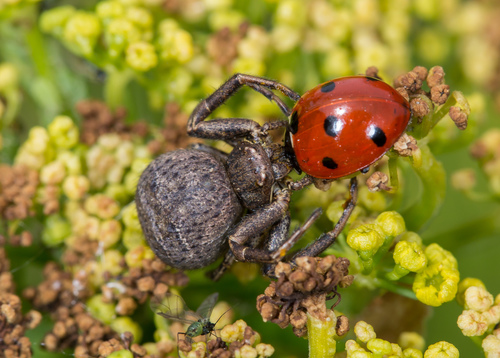
Xysticus acerbus
Photo: Photo: (c) Raoul Gerend, some rights reserved (CC BY-NC), uploaded by Raoul Gerend
Overview
The heidekrabspin (Xysticus acerbus) is a small crab spider characterized by its mottled brown and gray coloration that provides excellent camouflage among heathland vegetation. These ambush predators play a crucial role in their ecosystem by controlling populations of small flying insects, particularly those that visit heather flowers.
The heidekrabspin (Xysticus acerbus) faces severe population decline primarily due to habitat loss and degradation of its specialized heathland ecosystems. Agricultural intensification, urban development, and changes in traditional land management practices have dramatically reduced the availability of suitable sandy heathland habitats. Climate change may further exacerbate these pressures by altering the delicate ecological conditions this species requires.
Habitat
This species inhabits European heathlands, specifically dwelling among low-growing heather shrubs and associated grasses where it hunts from flower heads and vegetation tips. It shows a strong preference for mature heathland areas with diverse microhabitat structure including scattered bare patches and moss cushions.
Other threatened species in Thomisidae
Threatened in Albania

Frequently asked questions
Why is Xysticus acerbus classified as Critically Endangered?
Where does Xysticus acerbus live?
What are the main threats to Xysticus acerbus?
Get weekly conservation intelligence
One short digest a week of the most striking species and country data we ship, plus breaking conservation news paired with our database where it matters.
Free, no spam. One-click unsubscribe in every email.