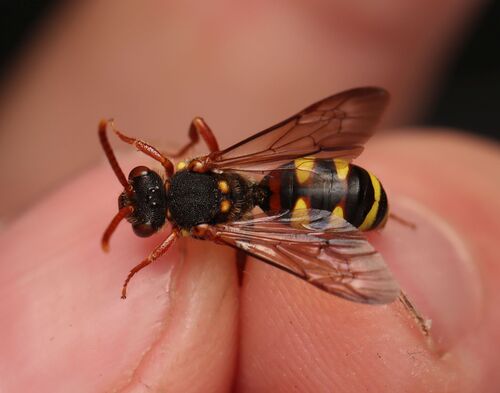
Kirby's Nomad Bee
Nomada subcornuta
Photo: Photo: (c) Hjalte Kjærby, some rights reserved (CC BY-NC), uploaded by Hjalte Kjærby
Overview
Kirby's Nomad Bee is a small, dark-colored cuckoo bee with distinctive yellow markings and a robust, compact body typical of the Nomada genus. As a brood parasite, this species infiltrates the nests of solitary ground-nesting bees, laying its eggs in host cells where the larvae consume the provisions intended for the host's offspring. This parasitic lifestyle makes it entirely dependent on the presence and abundance of its specific host bee species.
Kirby's Nomad Bee faces severe population decline primarily due to habitat loss and degradation of coastal dune systems where it depends on its host species. The species' highly specialized parasitic relationship with specific host bees makes it extremely vulnerable to any factors affecting host populations, while coastal development and climate change further threaten its remaining habitat.
Habitat
Kirby's Nomad Bee inhabits flower-rich grasslands, heathlands, and coastal dunes where its host bees establish ground-nesting colonies in sandy or well-drained soils. The species requires areas with abundant spring and early summer wildflowers, particularly favoring sites with diverse native plant communities that support both host bees and provide nectar sources.
Other threatened species in Apidae
Frequently asked questions
Why is Kirby's Nomad Bee classified as Critically Endangered?
Where does Kirby's Nomad Bee live?
What are the main threats to Kirby's Nomad Bee?
Get weekly conservation intelligence
One short digest a week of the most striking species and country data we ship, plus breaking conservation news paired with our database where it matters.
Free, no spam. One-click unsubscribe in every email.