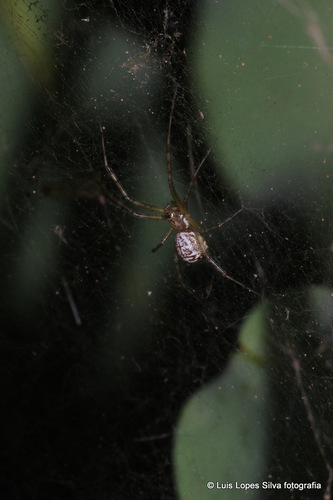
Linyphia tenuipalpis
Photo: Photo: (c) Luis Lopes Silva, all rights reserved, uploaded by Luis Lopes Silva
Overview
The grote heidehangmatspin (Linyphia tenuipalpis) is a small sheet web spider belonging to the family Linyphiidae, characterized by its delicate build and thin palps as suggested by its scientific name. This spider constructs horizontal sheet webs with a tangle of threads above, playing an important role as a predator of small flying insects in heathland ecosystems.
The grote heidehangmatspin (Linyphia tenuipalpis) is critically endangered primarily due to severe habitat loss and fragmentation of its specialized heathland ecosystem. Agricultural intensification, urban development, and changes in traditional land management practices have dramatically reduced the availability of suitable heathland habitats. Climate change may further threaten the species by altering the microhabitat conditions required for its survival.
Habitat
Linyphia tenuipalpis inhabits dry heathlands dominated by heather (Calluna vulgaris) and other ericaceous shrubs, where it builds its webs among the low vegetation. The species shows a strong preference for mature heathland with diverse microhabitats including moss layers and scattered grasses.
Other threatened species in Linyphiidae
Threatened in Åland Islands


Frequently asked questions
Why is Linyphia tenuipalpis classified as Critically Endangered?
Where does Linyphia tenuipalpis live?
What are the main threats to Linyphia tenuipalpis?
Get weekly conservation intelligence
One short digest a week of the most striking species and country data we ship, plus breaking conservation news paired with our database where it matters.
Free, no spam. One-click unsubscribe in every email.